
TL;DR:
- Professionals often neglect to update their LinkedIn profiles, leading to reduced visibility and missed opportunities. Regular quarterly updates, especially to the headline and About sections, enhance search rankings and recruiter engagement. Maintaining an active, current profile is essential for career growth, networking, and positioning yourself effectively in your field.
Most professionals treat their LinkedIn profile like a set-it-and-forget-it tool. They build it once, maybe update it when they start a new job, and assume it’s doing its job in the background. That assumption is quietly costing them opportunities. If you’ve been wondering why update LinkedIn in 2026, the answer goes far beyond just looking current. The platform’s algorithm, recruiter behavior, and professional expectations have all shifted significantly. What worked two years ago now leaves you invisible to the exact people you want to reach.
Table of Contents
- Key takeaways
- Why update LinkedIn in 2026: the algorithm has changed the rules
- Career benefits of keeping your profile current
- How to update LinkedIn effectively in 2026
- Overcoming common misconceptions about LinkedIn updates
- My honest take on LinkedIn updates and visibility
- Take your LinkedIn profile further with Talentfb
- FAQ
Key takeaways
| Point | Details |
|---|---|
| Algorithm rewards recency | Profiles updated at least every 90 days maintain stronger search rankings than stagnant ones. |
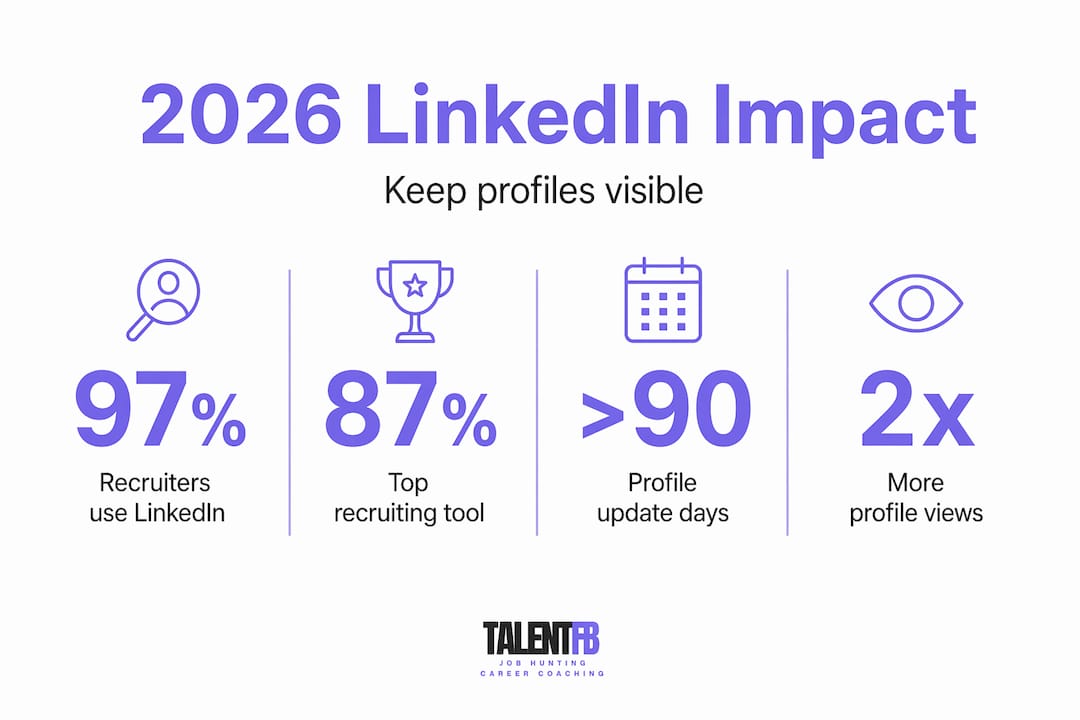
| Recruiters rely on LinkedIn | 97% of recruiters use LinkedIn to find candidates, making profile freshness a direct career asset. |
| Headline and About section matter most | These two fields carry the most weight in LinkedIn’s 2026 search algorithm. |
| Batch your edits strategically | LinkedIn re-indexes profiles roughly every 7 days after significant edits, so batching updates is more effective. |
| Peer benchmarking is real | Competitors improving their profiles can lower your relative search ranking even if you change nothing. |
Why update LinkedIn in 2026: the algorithm has changed the rules
LinkedIn is no longer just a digital resume database. It’s a search engine with its own ranking logic, and that logic increasingly favors profiles that are active, current, and complete. Understanding how the algorithm treats your profile in 2026 is the single most important reason to take regular updates seriously.
The platform treats recency as a trust signal. Profiles that have been recently edited are interpreted as belonging to active, engaged professionals. Those profiles get surfaced more often in recruiter searches and in the feeds of people in your network. Profiles that stay dormant are ranked lower, and the decay happens faster than most people realize.
Here’s what makes this particularly important for mid-career and senior professionals. You are not competing against an abstract algorithm. You are competing against other people in your field, in your location, with similar titles and experience. Peer benchmarking is built into LinkedIn’s ranking model. Even if your profile remains completely unchanged, another professional improving their profile pushes yours down in relative rankings. Staying still is effectively moving backward.
The specific fields that matter most are worth knowing. The headline and About sections carry significantly more weight in LinkedIn’s search algorithm than other fields. Exact keyword matches in these areas boost your ranking more than having the same words buried in your experience section. This means your headline is not a job title. It’s a positioning statement that needs to reflect the language recruiters and collaborators actually search for.
Key areas where the algorithm registers meaningful updates:
- Headline: Update this whenever your role, focus, or value proposition shifts, even subtly
- About section: Refresh this to reflect current priorities, skills, and language your industry uses
- Experience entries: Add accomplishments, not just responsibilities, and update metrics when available
- Skills section: Remove outdated skills and add those relevant to where you want to go, not just where you’ve been
- Featured section: Treat this as your portfolio. Stale content here signals inactivity
Pro Tip: Turn off “Notify your network” in LinkedIn settings before making multiple edits during a single session. This prevents a flood of update notifications while you work, and you can turn it back on for a single, intentional update once you’re done.
Career benefits of keeping your profile current
The importance of LinkedIn updates extends well beyond the algorithm. There are direct, tangible career benefits that compound over time when your profile consistently reflects your best professional self.
Start with recruiter behavior. 97% of recruiters use LinkedIn to find candidates in 2026, and 87% consider it their most effective vetting tool. That’s not a small margin. That’s near-universal adoption among the people who have the power to open doors for you. When a recruiter lands on your profile, you have seconds to make an impression. A profile that lists a role from three years ago as your most recent position, with no activity since, signals disengagement rather than ambition.
A fresh profile also changes the quality and relevance of opportunities that find you. LinkedIn’s recommendation engine surfaces your profile for roles and connections based on what it sees in your current data. If your headline and skills reflect where you were two years ago, the system will route you toward opportunities from two years ago. Updating your profile is how you tell the algorithm where you want to go, not just where you’ve been.

There’s also a thought leadership dimension that professionals often underestimate. When you update your About section to speak to your current expertise, add recent accomplishments to your experience, and post content that demonstrates genuine knowledge, consistent activity ranks higher than keyword-optimized but inactive profiles. This means the benefits of updating LinkedIn go well beyond search ranking. They extend to how your network perceives you and how credible you appear to people who are evaluating you for the first time.
Missing this creates a real cost. Professionals with stale profiles receive fewer profile views, fewer connection requests from relevant people, and fewer messages from recruiters. The gap between an actively maintained profile and a dormant one widens every quarter, because the LinkedIn networking tactics that generate momentum depend on a profile that earns trust at a glance.
How to update LinkedIn effectively in 2026
Knowing you should update your profile and knowing how to update LinkedIn effectively are two different things. The approach matters as much as the intention.
Start with update frequency. The research is clear on this point. Profiles updated at least every 90 days maintain their search ranking more consistently than those updated less often. Treat a quarterly profile review the same way you’d treat a quarterly business review. It belongs on your calendar.
Here’s the recommended approach to a high-impact quarterly update:
- Audit your headline first. Does it reflect your current role, your target role, or the skills most valuable to your next opportunity? If it reads like a job title with no differentiation, rewrite it.
- Refresh the About section. This should read like a professional narrative, not a resume bullet list. Update it to reflect your current thinking, not just your history.
- Add accomplishments to your most recent experience. Numbers and outcomes age well. Vague descriptions of responsibilities do not.
- Update your Skills section. LinkedIn allows you to list up to 50 skills, but quality beats quantity. Prioritize skills that are searchable and relevant to your next move.
- Refresh your Featured section. Replace outdated posts or articles with content that represents your expertise today.
- Check your profile photo and banner. A photo from a decade ago creates a disconnect. Your banner is prime visual real estate that most professionals leave blank.
Pro Tip: Batch all your edits into a single session and do them together. LinkedIn re-indexes profiles roughly every 7 days after significant edits. Making multiple small changes throughout the month is far less effective than one concentrated update that triggers a full re-index.
Content engagement is a separate but complementary strategy. Posting articles or short updates that demonstrate expertise amplifies the impact of a well-optimized profile. LinkedIn prioritizes knowledge and advice content that shows genuine expertise, giving it three to five times more reach than generic personal posts. You don’t need to post daily. You need to post with substance and intention.
One important note on engagement tactics: explicit engagement requests and external links in post captions reduce your content’s reach by roughly 60% under the 2026 algorithm. Asking people to “like and comment” or dropping external URLs in your caption actively works against you.
Overcoming common misconceptions about LinkedIn updates
Several deeply held beliefs prevent professionals from maintaining their profiles consistently. Addressing them directly is worth your time.
The biggest misconception is timing. Many professionals believe LinkedIn is a tool for active job seekers and that updating it only makes sense when you’re looking. This thinking leaves you starting from zero every time you need the platform to work for you. Building visibility takes time. By the time you decide you need LinkedIn to perform, it’s already too late to build the momentum you need quickly. A profile that drives recruitment for senior tech careers is one that has been consistently maintained, not hastily rebuilt.
Other common obstacles include:
- Update fatigue: The feeling that there’s nothing new to add. This usually means the updates are too infrequent. A quarterly review reveals more than you’d expect.
- Content anxiety: Fear that posting will come across as self-promotional. Knowledge-based posts that share genuine professional insight are not self-promotional. They’re useful.
- Keyword stuffing concerns: Packing your profile with every possible keyword phrase makes it unreadable. Focus on the two or three terms most central to your professional identity and use them naturally.
- All-Star status as a one-time goal: All-Star profiles receive a significant ranking boost, but reaching All-Star status is not enough on its own. Maintaining it with fresh content is what sustains the benefit.
The most manageable approach is to treat LinkedIn maintenance as a low-effort, high-return habit rather than a major project. A 30-minute quarterly session, guided by a simple checklist, removes the friction that causes most professionals to delay.
My honest take on LinkedIn updates and visibility
I’ve worked with hundreds of senior professionals and executives who came to me convinced their LinkedIn profile was “fine.” What I’ve consistently found is that “fine” is doing a lot of work to cover “stale.”
In my experience, the professionals who gain the most from LinkedIn are not the ones with the most impressive backgrounds. They’re the ones whose profiles are active mirrors of where they are right now, not where they were. I’ve seen people with genuinely impressive careers get passed over simply because their profile hadn’t been touched in 18 months. And I’ve seen mid-level professionals land conversations with senior leaders because their About section spoke directly to the problems those leaders were trying to solve.
What I’ve learned about timing is this: the best moment to update your LinkedIn profile is before you think you need to. The algorithm rewards consistency, not urgency. A profile that has been refreshed quarterly for the past year will always outperform one that was completely overhauled last week.
The content question trips people up unnecessarily. You don’t need to become a LinkedIn influencer. You need to post something worth reading once or twice a month. Thoughtful, specific, experience-based content builds credibility without feeling performative. That’s what LinkedIn’s depth score is actually rewarding. Substance, not frequency.
The habit that sustains all of this is simple: treat your LinkedIn profile like a living document, not a snapshot. Every quarter, ask yourself whether what’s on your profile reflects the professional you are today. If the answer is no, that’s your cue.
— Frederic
Take your LinkedIn profile further with Talentfb
Knowing the theory behind why enhance LinkedIn profile is one thing. Executing it consistently, with the right strategy for your career stage, is another challenge entirely. Talentfb works specifically with senior professionals, managers, and executives in the technology sector to translate that knowledge into real career momentum. The AI Job Search Accelerator combines personalized LinkedIn profile revitalization, targeted outreach strategy, and AI-powered tools to help you show up exactly where the right opportunities are looking. If you want to measure where your profile stands right now, the Executive Visibility Scorecard gives you a clear baseline and a path forward. Your next opportunity is already searching for someone like you. Make sure it finds you.
FAQ
Why should I update my LinkedIn profile in 2026?
LinkedIn’s 2026 algorithm treats profile recency as a ranking signal, meaning stale profiles appear lower in recruiter search results. Regular updates keep you visible to the right people at the right time.
How often should I update my LinkedIn profile?
Updating at least every 90 days is the recommended standard to maintain consistent search ranking and avoid ranking decay from competitor profile improvements.
Which LinkedIn sections matter most for search visibility?
The headline and About section carry the most weight in LinkedIn’s search algorithm. Keeping these two fields current and keyword-relevant has the largest impact on your search ranking.
Does posting content help my LinkedIn profile rank higher?
Yes. Engaged profiles that consistently post substantive content rank higher than keyword-optimized but inactive ones. Knowledge-based posts that demonstrate expertise generate three to five times more reach than generic updates.
Is it worth updating LinkedIn even if I’m not job searching?
Absolutely. Recruiter outreach, networking opportunities, and thought leadership visibility all depend on a consistently maintained profile. Waiting until you’re actively searching means starting with a visibility deficit that takes time to recover from.