

TL;DR:
- Most senior tech executives rely heavily on passive candidate outreach through retained recruiters. Building strong, ongoing relationships with executive recruiters and maintaining a visible professional brand can unlock hidden leadership opportunities. Tech sector hiring is highly competitive and requires technical credibility, cultural fit, and proactive engagement beyond job postings.
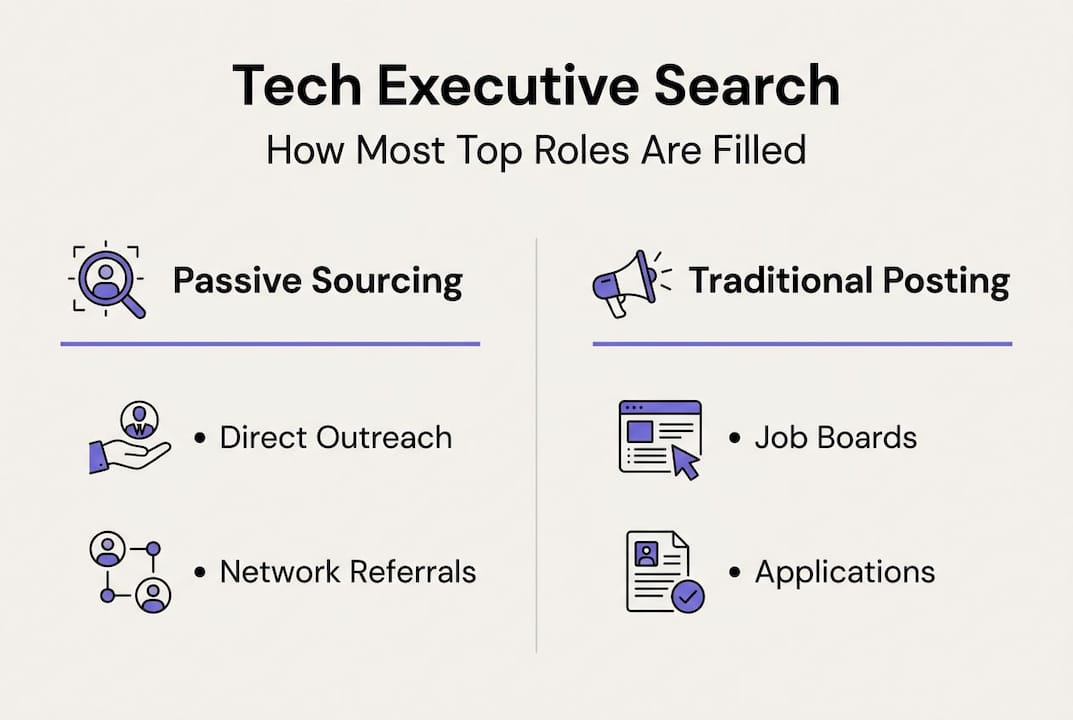
Most senior technology executives assume the job market works the same way it did at the start of their careers: a role opens, it gets posted, and the best candidate applies. That assumption is expensive. Over 90% of executive hires in tech are made through passive candidate outreach, meaning the most coveted CTO, CIO, and VP Engineering positions are filled quietly, through recruiter networks, before a single job ad goes live. Understanding how executive recruiters operate is not just useful knowledge. It is a strategic lever that can accelerate your career in ways that job boards simply cannot match. This guide breaks down who these professionals are, how their process works, and exactly what you can do to position yourself for the roles that never get advertised.
Table of Contents
- Understanding executive recruiters: Who they are and what they do
- How executive search works: Steps from mandate to placement
- Why tech sector executive searches are unique
- How to leverage executive recruiters for your career advancement
- Why most tech executives miss recruiter opportunities (and what to do differently)
- Leverage tech career success tools with TalentFB
- Frequently asked questions
Key Takeaways
| Point | Details |
|---|---|
| Hidden job market | Most top tech roles are filled by recruiters through passive candidate outreach, not job postings. |
| Specialized search process | Executive recruiters use a structured, multi-step method with high success rates for tech leadership roles. |
| Tech sector challenges | Fierce talent scarcity and the need for nuanced, stage-specific experience shape the executive recruitment landscape. |
| Advance proactively | Building your recruiter relationships and public brand early is key for long-term career growth. |
Understanding executive recruiters: Who they are and what they do
Executive recruiters are specialists hired by companies to identify and attract senior talent, typically for roles that require a precise mix of technical depth, leadership experience, and cultural alignment. They are not HR generalists. They are market experts who spend years building networks within specific verticals, and in tech, that specialization matters enormously.
There are two primary models you need to know. Retained search firms are paid an upfront fee, work exclusively on a single mandate, and focus on quality over speed. Contingency search firms are paid only when a placement is made, often work on multiple competing mandates simultaneously, and prioritize volume. For senior technology roles, retained search is the dominant model.
Executive recruiters in tech typically operate retained searches for roles like CTO, CIO, or VP Engineering, using a highly structured process that starts with deep client discovery and market mapping before a single candidate is contacted.
| Factor | Retained search | Contingency search |
|---|---|---|
| Fee structure | 25-35% of salary, paid upfront | Fee paid only on placement |
| Exclusivity | Yes, one firm per mandate | No, multiple firms compete |
| Focus | Quality, long-term fit | Speed, volume |
| Best for | C-suite, VP-level roles | Mid-level, high-volume hiring |
| Success rate | ~71% placement rate | Lower, variable |
Understanding this distinction helps you prioritize which relationships to cultivate. Retained search firms carry the mandates for the roles you actually want. They are the ones with access to specialized recruiter roles that never surface publicly.
- Retained recruiters act as trusted advisors to their clients, not just resume forwarders.
- They assess cultural fit, leadership style, and long-term trajectory, not just technical credentials.
- Their reputation depends on placement quality, so they are highly selective about who they present.
- A single retained recruiter relationship can open doors across multiple companies over a decade.
Pro Tip: Do not wait until you are actively looking to connect with executive recruiters. Reach out when you are settled and thriving in your current role. That is when you are most attractive, and the conversation is pressure-free.
How executive search works: Steps from mandate to placement
Knowing who executive recruiters are is only half the picture. Understanding how their process actually unfolds gives you a significant advantage, because you can position yourself at every stage rather than waiting to be discovered.
A structured executive search process moves from client discovery through market mapping, AI-enhanced sourcing, candidate assessment, structured interviews, reference checks, and finally offer negotiation. Each stage is deliberate, and the best candidates are often identified weeks before they are ever contacted.
- Client discovery: The recruiter meets with the hiring company to define the role, culture, leadership expectations, and success metrics.
- Market mapping: A target list of companies and individuals is built, often using AI-powered sourcing tools alongside human intelligence.
- Passive outreach: Top candidates are contacted directly, usually through LinkedIn or personal networks, regardless of whether they are job seeking.
- Assessment: Shortlisted candidates complete structured interviews, leadership assessments, and sometimes psychometric evaluations.
- Reference checks: Deep referencing is conducted, often including back-channel conversations with former colleagues.
- Offer negotiation: The recruiter acts as an intermediary, managing expectations on both sides to reach a successful close.
“Retained searches in technology have a 71% success rate, vastly outperforming contingency.”
The average time to fill a senior tech role through executive search is approximately 123 days. That timeline reinforces why passive visibility matters so much. By the time a role feels urgent to you, a recruiter may have already been working the mandate for two months.
Your structured executive search steps awareness should inform how you manage your professional brand year-round. Keeping your executive profile optimization current and your thought leadership visible means you are always in a recruiter’s consideration set, not scrambling to catch up. This is part of a broader approach to career development for tech leaders that pays dividends long before you decide to make a move.
Why tech sector executive searches are unique
Not all executive searches are created equal. Technology leadership hiring operates under a different set of pressures, and understanding those pressures helps you see why the rules that apply in other industries simply do not translate.

The tech sector faces a 60% talent scarcity, meaning fewer than half of the senior leaders companies need actually exist and are available in the market at any given time. This scarcity drives nearly everything about how tech executive searches are conducted.
According to industry statistics, more than 90% of successful placements in tech come from passive candidate sourcing. The best people are not browsing job boards. They are leading teams, shipping products, and building companies. Recruiters go to them.
| Factor | Tech executive search | Non-tech executive search |
|---|---|---|
| Talent availability | ~40% of needed leaders available | Higher availability in most sectors |
| Passive sourcing reliance | 90%+ of placements | 50-60% of placements |
| Speed pressure | High, due to competitive market | Moderate |
| Technical vetting depth | Extensive, role-specific | General leadership focus |
| Stage relevance | Critical (startup vs enterprise) | Less emphasized |
What makes a CTO or CIO search particularly complex includes several factors that other industries rarely encounter:
- Stage-specific experience: A leader who scaled a Series B startup may not be the right fit for a 10,000-person enterprise, and vice versa.
- Technical credibility: Peers and engineering teams expect leaders who can engage at a technical level, not just manage budgets.
- Speed of change: The tech talent shortage means companies cannot afford a six-month vacancy at the VP level.
- Culture and innovation fit: Tech companies, especially product-led ones, prioritize culture alignment as heavily as credentials.
Effective talent management in tech at the executive level requires recruiters who understand these nuances deeply. When you engage with a tech-focused executive search firm, you are working with someone who speaks your language and can advocate for your specific value proposition in a way a generalist recruiter cannot.
How to leverage executive recruiters for your career advancement
Understanding how the system works is valuable. Knowing how to work within it strategically is where real career momentum begins.
Executives who build their professional brand ahead of time consistently outperform peers who only engage with recruiters reactively. The goal is to become someone a recruiter thinks of unprompted, not just someone who responds well when called.
Here is a practical sequence for building those relationships:
- Identify the right firms. Research retained search firms that specialize in technology leadership. Focus on those with a track record in your specific niche, whether that is enterprise software, cybersecurity, or infrastructure.
- Make first contact with value. Reach out with a brief, specific message that highlights your current role, your area of expertise, and your general career direction. Do not ask for a job. Offer to be a resource.
- Keep your LinkedIn profile current. Recruiters use LinkedIn as their primary sourcing tool. Your profile is your digital mirror. Make sure it reflects your most recent impact, not just your job titles. Explore career branding strategies that help you stand out in a crowded field.
- Publish thought leadership regularly. Articles, posts, and commentary on industry trends signal that you are active, engaged, and forward-thinking. Recruiters notice.
- Refer strong candidates. When a recruiter contacts you about a role that is not right for you, refer someone excellent. That single act of generosity builds more goodwill than a polished resume ever could.
- Follow up annually. A brief check-in once a year keeps you top of mind without feeling intrusive. Share a career update, a recent achievement, or an article you found relevant.
You can access additional job search resources to sharpen your outreach approach and ensure every touchpoint reinforces your executive brand.
Pro Tip: Avoid waiting for a public opening to plant seeds. The best executive roles are filled through conversations that started months or even years before the mandate was created.
Why most tech executives miss recruiter opportunities (and what to do differently)
Here is an uncomfortable truth: most senior tech professionals treat executive recruiters like a 911 service. They call when something is wrong, expect immediate results, and then go quiet once the crisis passes. That transactional mindset is exactly why so many talented leaders find themselves on the outside of the hidden job market.
The myth that soft skills and culture fit matter less than technical credentials in tech is particularly damaging. Recruiters working on CTO and CIO mandates consistently report that culture misalignment is the number one reason offers fall through at the final stage. Your architecture decisions and P&L ownership matter. So does how you show up in a room.
We have seen leaders with extraordinary track records miss career-defining roles simply because a recruiter did not know them well enough to advocate confidently. One VP of Engineering we worked with had spent a decade building category-leading products but had never invested in recruiter relationships. When a transformational CTO role opened at a company he admired, the recruiter had already filled the shortlist with candidates they knew personally.
The shift is simple but requires discipline. Treat every recruiter interaction as a long-term investment. Share insights. Be generous with referrals. Stay visible through strategic recruitment insight and consistent professional engagement. If you only react to posted roles, you are engaging with roughly 10% of the real market.
Leverage tech career success tools with TalentFB
The strategies in this article are powerful, but they work best when backed by the right tools and guidance. TalentFB is built specifically for senior tech professionals who want to move faster and smarter through the executive job market.
Whether you want to sharpen your positioning with the AI Job Search Playbook, work directly with an advisor through career coaching sessions, or benchmark your current visibility with the Executive Visibility Scorecard, TalentFB gives you a structured path from where you are to where you want to be. Stop waiting for the right role to appear. Start building the visibility that makes recruiters come to you.
Frequently asked questions
What is the main difference between a retained and contingency executive search?
Retained search is exclusive and quality-focused, with fees paid upfront, while contingency search is non-exclusive and only compensated upon a successful placement. For senior tech roles, retained search is the standard.
How long does a typical executive search take in the technology sector?
Filling a senior tech role through executive search takes approximately 123 days on average, or roughly 8 to 12 weeks depending on role complexity and market conditions.
Why do most successful executive placements in tech come from passive candidates?
Top tech leaders are rarely browsing job boards. Recruiters proactively source passive talent because the best candidates are already succeeding in their current roles and need to be approached directly.
How can senior tech leaders get on a recruiter’s radar even if not job seeking?
Building a strong public professional brand and engaging with recruiters consistently before you need a new role is the most reliable way to stay in their consideration set.