TL;DR:
- Effective leadership showcasing on LinkedIn involves translating tangible results into signals that reveal your domain expertise and decision-making authority. Building a compelling profile with a high-impact headline, comprehensive About section, outcome-focused experience entries, and strategic skills enhances visibility and trust. Consistently publishing opinionated, specific content while actively engaging in conversations accelerates authority and attracts inbound opportunities organically.
Showcasing leadership on LinkedIn is defined as the deliberate practice of making your professional impact, decision-making authority, and domain expertise visible through your profile, content, and engagement. This is not about listing job titles or adding buzzwords to your headline. It is about translating real results into signals that recruiters, hiring managers, and industry peers can immediately recognize and trust. Done well, your LinkedIn profile becomes a living case for why you are the right person to lead. This guide walks you through every layer of that process, from profile architecture to content strategy to the daily habits that compound into genuine authority.
How to showcase leadership on LinkedIn through your profile
Your LinkedIn profile is the foundation of your leadership brand. Before any recruiter reads a single post you have written, they will land on your profile and decide within seconds whether you are worth their time.

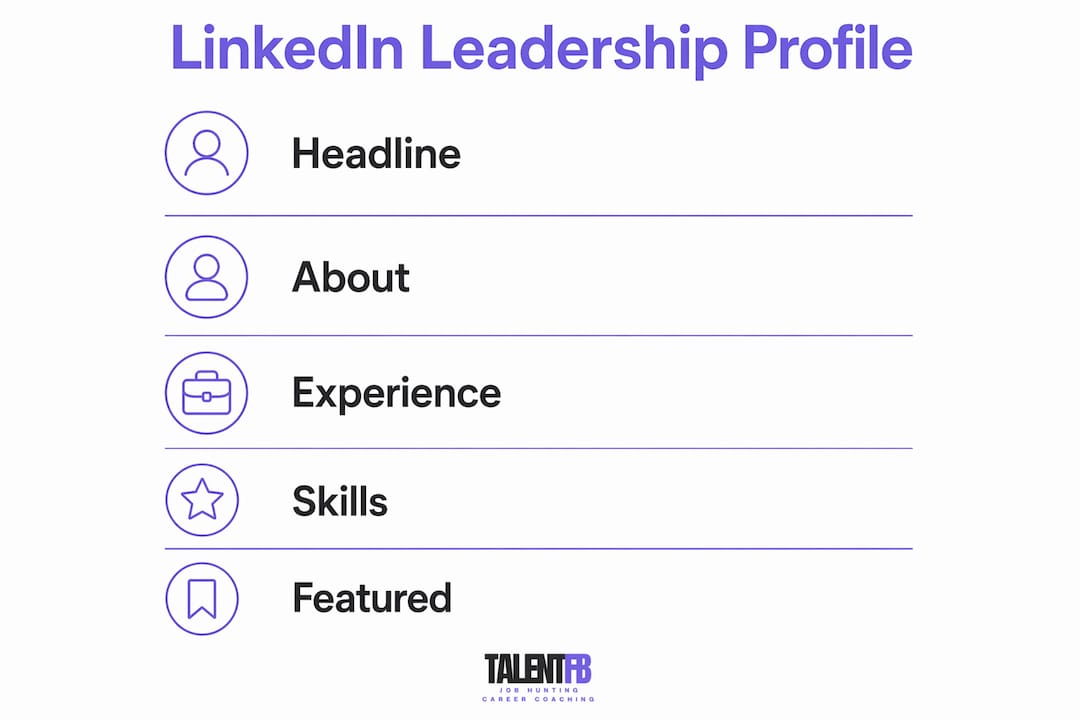
The headline is your first and most powerful signal. It should not just state your job title. It should communicate your value proposition as a leader. A headline like “VP of Engineering | Scaling distributed teams across APAC | 0 to 100 engineers in 3 years” tells a story in one line. Compare that to “VP of Engineering at TechCorp” and the difference is immediate. You can find strong headline framing examples that translate leadership into compelling positioning.
The About section is where your leadership narrative lives. Profiles with complete About sections receive 3.9 times more views, and the first four lines are the most critical because they appear before the “see more” cutoff. Open with a direct statement of what you do and the scale at which you do it. Avoid phrases like “passionate leader” or “results-driven professional.” Instead, write something like: “I build and scale engineering organizations in Southeast Asia. In my last three roles, I grew teams from 12 to 80, cut time-to-hire by 40%, and launched two products that reached 1M users.”
Your Experience section should read like a portfolio of decisions and outcomes, not a list of responsibilities. Each role entry should answer: what did you inherit, what did you change, and what measurably improved? Use numbers wherever possible. “Led a team” is invisible. “Led a 35-person product team through a platform migration that reduced customer churn by 22% in six months” is a leadership signal.
The Skills section is more powerful than most professionals realize. Profiles with 5 or more skills are 27 times more likely to appear in recruiter searches. LinkedIn allows up to 100 skills, and 92% of recruiters rely on LinkedIn Recruiter’s skill-based filtering. Aim for at least 25 endorsed skills and pin your top three leadership-related skills, such as “Strategic Planning,” “P&L Management,” or “Cross-functional Leadership,” to the top of the list.
The Featured section is underused by most senior professionals. Use it to pin a case study, a high-performing post, a media mention, or a lead magnet that demonstrates your thinking. This section acts as your personal showcase window and gives visitors a reason to stay longer on your profile.
Pro Tip: Pin a post or article to your Featured section that includes a real result you are proud of. A single well-chosen piece of evidence does more for your leadership brand than ten generic endorsements.
What makes leadership content on LinkedIn actually work?
Content is where leadership branding either accelerates or stalls. Most professionals post too infrequently, too broadly, or too safely to build real authority.
Executive content that is opinionated, personal, and specific achieves the highest reach and trust on LinkedIn. The most effective content mix for leaders follows this rough distribution: 40% authority-building posts, 30% personal insight posts, 20% social proof, and 10% educational content. That balance matters because it mirrors how trust is actually built. People follow leaders who have a point of view, not just information.
The four post types that consistently perform well for leadership branding are:
- Contrarian takes. Challenge a widely held belief in your industry with evidence from your own experience. “Everyone says you need a large team to scale fast. Here is why I think that is wrong, and what we did instead.”
- Insider insights. Share what you know from the inside that most people outside your role cannot see. This is the content that makes readers feel they are getting access to something real.
- Lessons learned. Document a specific failure or pivot with the outcome and what you would do differently. Vulnerability paired with resolution is one of the most trusted formats on LinkedIn.
- Frameworks. Share a repeatable mental model or decision-making process you actually use. Frameworks are highly shareable and position you as a systems thinker.
Posting consistently three to four times per week builds trust and authority faster than sporadic viral posts. This is a finding that surprises most professionals, who assume one big post will do the work. It does not. Cadence signals commitment, and commitment is what leadership looks like from the outside.
Pro Tip: Write from a specific moment, not a general observation. “Last Tuesday, my CTO told me something that changed how I think about hiring” will always outperform “Here are five things great leaders do.” Specificity is the difference between a post people scroll past and one they save.
Thought leadership content drives vendor shortlists and is trusted more than traditional marketing by decision makers. This means your posts are not just career tools. They are business development assets that work while you sleep.
How engagement and networking amplify your leadership presence
Publishing content is only half the equation. How you show up in other people’s conversations determines how quickly your leadership presence compounds.
The most effective daily habit for LinkedIn visibility is commenting. Not generic comments like “Great post!” but substantive replies that add a data point, a counterexample, or a question that extends the conversation. When you leave a thoughtful comment on a post by a peer or industry leader, their entire network sees your name and your thinking. This is free reach that most professionals ignore.
Personal profiles generate roughly twice the engagement of company pages because of the authentic voice advantage. This is why your personal leadership presence will always outperform any company page you are associated with. Invest your time accordingly.
Lead magnets on posts are one of the most underused tools for senior professionals. Posts that include a lead-magnet call-to-action generate approximately 20 times the impressions and 10 times the engagement of standard posts. A simple prompt like “Comment FRAMEWORK and I will send you the decision-making template I use with my leadership team” can turn a single post into a visibility spike that lasts days.
Here is what a strong engagement strategy looks like in practice:
- Comment on five to ten posts per day from people in your target niche, adding genuine perspective
- Reply to every comment on your own posts within the first two hours, since early engagement signals boost algorithmic reach
- Send personalized connection requests to people who engage with your content, referencing the specific post or comment
- Follow and engage with the accounts of companies or leaders you want to be associated with, so your name appears in their orbit consistently
Building a network aligned with your leadership niche, rather than collecting connections broadly, increases the likelihood of referrals and inbound opportunities. LinkedIn networking tactics designed for tech executives show that targeted relationship-building produces far better results than volume-based connection strategies.
Common mistakes that undermine your leadership brand on LinkedIn
Even experienced professionals make avoidable errors that quietly erode their leadership presence.
- Using internal or creative job titles. Titles like “Impact Catalyst” or “Head of People Magic” may feel authentic, but standard industry titles like “Director of People Operations” rank significantly better in LinkedIn Recruiter searches. Your title is a search keyword. Treat it like one.
- Outsourcing your point of view. Hiring a ghostwriter to post generic leadership content is a fast path to an inauthentic profile. Readers and recruiters can sense when a post has no real experience behind it. A content system that captures short input sessions of real executive thinking and then shapes drafts around that thinking is a far better approach than fully outsourced content.
- Being a generalist. Choosing a specific niche for your leadership content prevents you from appearing as a generalist and significantly increases referral likelihood. “Leadership” is not a niche. “Scaling engineering teams in regulated fintech environments” is a niche. The narrower your focus, the stronger your signal.
- Posting once and disappearing. One strong post does not build a brand. An ongoing content system does. If you post three times and then go quiet for six weeks, the algorithm deprioritizes your content and your audience loses the thread of who you are.
- Treating low engagement as failure. Early posts often underperform because your network has not yet calibrated to your content. The fix is not to change your message. It is to stay consistent, refine your specificity, and engage more actively with others so your reach grows organically.
Pro Tip: If your posts are getting low engagement, check whether you are writing for a broad audience or a specific one. A post about “leadership lessons” speaks to everyone and resonates with no one. A post about “what I learned managing a 40-person team through a product pivot in six months” speaks to a specific reader and earns their trust.
What I have learned after 15 years watching leaders build their presence
After spending 15 years inside hiring rooms across tech, fintech, adtech, gaming, and maritime-tech in APAC, I have watched hundreds of senior professionals struggle with the same thing: they have genuinely impressive careers, but their LinkedIn profiles read like a job description from 2015.
The professionals who attract the best opportunities are not always the most accomplished. They are the ones who have learned to make their accomplishments legible. They write with specificity. They share opinions that make you think. They show up consistently, not just when they are job hunting.
The most common mistake I see is waiting until you need LinkedIn to start building your presence. By then, you are already behind. The leaders who get inbound messages from top companies are the ones who have been quietly building their brand for months or years before they needed it.
Vulnerability is also more powerful than most executives expect. Sharing a decision that did not go as planned, with the honest reflection that followed, builds more trust than a highlight reel of wins. People follow leaders they believe in, and belief comes from authenticity, not perfection.
My honest recommendation: pick one niche, commit to one post type for 30 days, and engage with ten people in your space every single day. That is not a complicated system. It is a sustainable one. And sustainable beats brilliant every time when it comes to career visibility on LinkedIn.
— Frederic Bonifassy
Ready to build a LinkedIn presence that opens doors?
If this guide has shown you the gap between where your LinkedIn profile is today and where it needs to be, TalentFB can help you close it faster than you would on your own.
TalentFB works with senior tech professionals and executives across APAC to optimize LinkedIn profiles for leadership visibility, recruiter discoverability, and inbound opportunity. Whether you are a Director, VP, or C-suite leader looking to attract your next role or build a talent magnet for your organization, the coaching programs at TalentFB are built around your specific goals. Explore the executive career coaching guide to see how structured, personalized support translates into real career outcomes within 90 days.
FAQ
What LinkedIn sections matter most for leadership visibility?
The headline, About section, Experience entries, and Skills section are the four highest-impact areas. Profiles with complete About sections receive 3.9 times more views, and those with 5 or more skills are 27 times more likely to appear in recruiter searches.
How often should leaders post on LinkedIn to build authority?
Posting three to four times per week builds trust and authority faster than sporadic viral posts. Consistency signals commitment and keeps your content prioritized by the LinkedIn algorithm.
What types of posts work best for demonstrating leadership on LinkedIn?
Contrarian takes, insider insights, lessons learned, and frameworks are the four post types that consistently build leadership authority. Opinionated, experience-based, and specific content achieves the highest reach and trust among decision makers.
Why does niche focus matter for leadership branding on LinkedIn?
Focusing on a specific leadership niche prevents you from appearing as a generalist and significantly increases referral likelihood. A narrow, well-defined area of expertise makes you the obvious choice for a specific type of opportunity rather than a vague candidate for many.
How do lead magnets improve leadership post performance?
Posts that include a lead-magnet call-to-action generate approximately 20 times the impressions and 10 times the engagement of standard posts. Offering a resource in exchange for a comment dramatically extends your post’s reach and attracts a highly relevant audience.