

TL;DR:
- Most senior tech roles are filled through networking and referrals rather than job applications. Building genuine relationships and engaging with the hidden job market is crucial for executive success. Strategic networking with targeted outreach and relationship nurturing unlocks unadvertised opportunities and accelerates career growth.
If you’re a senior technology professional relying primarily on job boards to land your next executive role, you’re working against the odds. 85% of jobs are filled through networking, and 70–80% of senior positions are never publicly advertised. That means the most competitive opportunities rarely appear in your LinkedIn feed or on any job board. Networking is not a soft skill or a nice-to-have. For executives in tech, it is the primary engine of career advancement. This guide gives you the strategic clarity and actionable methods to use your network as the powerful career tool it was always meant to be.
Table of Contents
- Why networking dominates the executive job search
- Where the opportunities hide: The hidden job market
- Strategic networking methods for senior tech roles
- Executive-level networking tactics: Proven approaches
- A contrarian perspective: What most executives miss about networking
- Take your networking to the next level with strategic support
- Frequently asked questions
Key Takeaways
| Point | Details |
|---|---|
| Networking unlocks most jobs | Most executive opportunities are filled through networking, not public postings. |
| Hidden job market access | Building relationships is the key to tapping into unadvertised senior roles. |
| Strategic actions matter | Personalized outreach, value-first engagement, and niche communities drive results. |
| Human connection beats tech | While AI tools help, authentic interactions ultimately open doors. |
Why networking dominates the executive job search
At the senior level, hiring decisions rarely start with a job posting. They start with a conversation. A board member mentions a gap to a trusted peer. A VP of Engineering asks her network for a CTO recommendation. A search firm calls on a known quantity before the role is even finalized. By the time a position goes public, the shortlist is often already forming behind the scenes.
The data confirms this reality. 70–85% of senior roles are secured through networks and referrals, not applications. And when companies do post executive openings, the median time-to-fill for senior roles is 42–45 days, which means decision-makers are moving fast and relying on people they already know and trust.
Here is why networking works so effectively at the executive level:
- Referrals reduce hiring risk. Decision-makers trust a colleague’s endorsement far more than a resume from a stranger.
- Relationships signal leadership. Your ability to build and maintain a strong network is itself a signal of executive capability.
- Speed matters. Networked candidates often move through the process faster because trust is already established.
- You control the narrative. A warm introduction lets you frame your value before anyone reviews your resume.
“The job market for executives is not a meritocracy of applications. It is a marketplace of relationships. The strongest candidate is often the one most people already know.”
Traditional applications at the senior level rarely succeed in isolation. Submitting a resume through a company portal, without a connection inside, places you in a pool of hundreds. Contrast that with a warm introduction from a mutual contact, and the difference in response rate is not marginal. It is dramatic. A well-executed job search strategy guide for tech leadership will always place networking at the center of the plan, not at the periphery.
Building authentic relationships is a genuine competitive advantage. It takes time, but the return compounds. Every meaningful connection you nurture today is a potential door to an opportunity you cannot yet see.
Where the opportunities hide: The hidden job market
The “hidden job market” is not a myth or a metaphor. It is the operating reality for most executive searches in technology. These are real roles, with real budgets and real urgency, that simply never make it to a public job board.
Why does this happen? Companies often prefer to avoid the noise of a public search. A posted role generates hundreds of applications, most of them unqualified. For a VP or C-suite position, the cost of a bad hire is enormous. So organizations lean on trusted networks, retained search firms, and internal referrals to surface candidates quietly. 70–80% of roles are filled this way, before a single job description is ever published.
Visible vs. hidden opportunities at the executive level:
| Factor | Public job postings | Hidden job market |
|---|---|---|
| Visibility | High | Low |
| Competition | Very high | Low to moderate |
| Fit quality | Often poor | Generally strong |
| Access method | Direct application | Network and referrals |
| Speed of process | Slower | Often faster |
The gatekeepers to hidden roles are not HR coordinators. They are the executives, board members, and investors who already know the hiring manager. Your goal is to build genuine relationships with these people before you need them.
Here is a practical process to access the hidden market:
- Map your target companies. Identify 15–20 organizations where you would genuinely thrive. Focus on culture, growth stage, and leadership team quality.
- Research decision-makers. Find the people two levels above your target role. These are the individuals who will influence or make the hiring call.
- Identify shared connections. Use LinkedIn and alumni networks to find warm paths to these decision-makers.
- Reach out with context and value. Reference a shared connection, a piece of their work you found genuinely interesting, or an insight relevant to their business.
- Stay in the conversation. Follow their content, comment thoughtfully, and check in periodically. Consistency builds familiarity.
Exploring technology’s role in networking can help you identify the right platforms and tools to support this process. You can also find free executive networking tools to get started without a significant investment of time or money.
Strategic networking methods for senior tech roles
Knowing that the hidden job market exists is one thing. Knowing how to access it systematically is another. For senior technology professionals, the most effective networking combines digital presence with deliberate, human outreach.
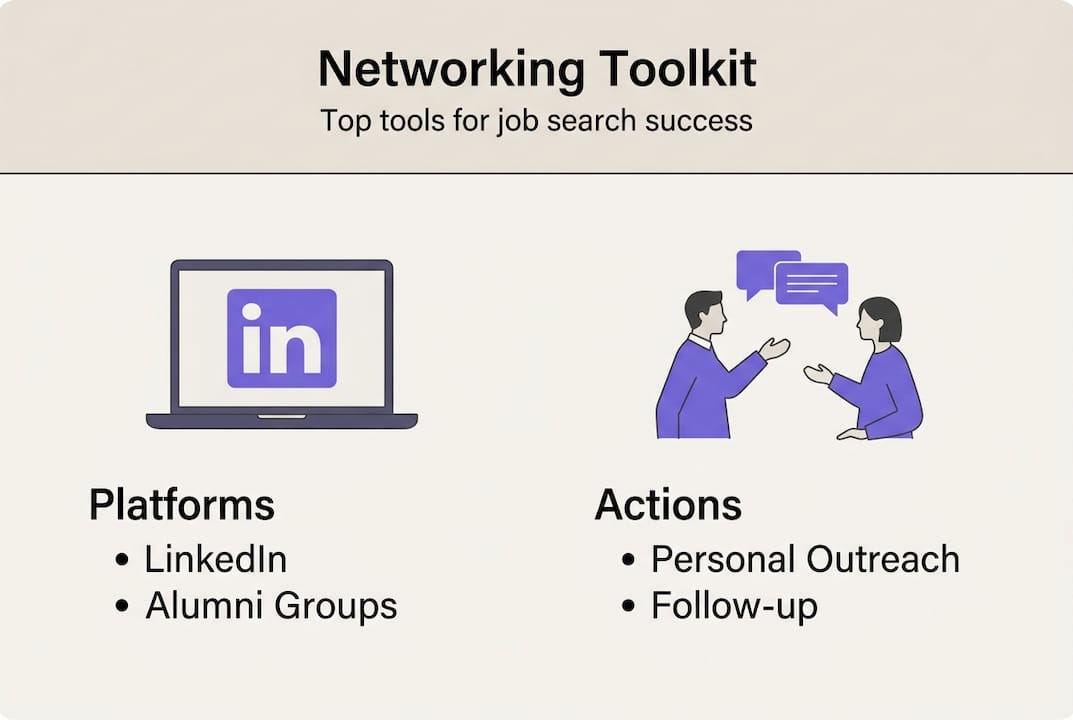
LinkedIn remains the linchpin of executive networking. According to LinkedIn’s 2025 Work Change Report, profile optimization and personalized outreach are critical for executives seeking to build meaningful professional relationships. A strong profile is your digital mirror. It should communicate your leadership philosophy, your measurable impact, and your forward-looking vision, not just a list of past titles.

When reaching out to a new connection, personalization is non-negotiable. Reference a specific article they wrote, a shared alumni connection, or a project you genuinely admire. Generic connection requests are ignored. Specific, thoughtful messages open conversations. For a detailed approach to optimizing LinkedIn for networking, including how to position your headline and summary for executive visibility, the investment of an hour can pay dividends for years.
Effective networking channels for senior tech professionals:
| Channel | Best use case | Effort level |
|---|---|---|
| LinkedIn outreach | Warm introductions, thought leadership | Medium |
| Alumni networks | Trusted referrals, peer connections | Low to medium |
| Executive roundtables | Peer learning, decision-maker access | Medium to high |
| Tech conferences | Visibility, serendipitous connections | High |
| Online communities | Niche expertise, consistent presence | Low |
Beyond LinkedIn, alumni networks are consistently underutilized by senior professionals. Your university or MBA program likely has a robust portal with direct access to executives at target companies. Tech events and executive roundtables offer something digital channels cannot: the spontaneous, trust-building power of face-to-face interaction.
Pro Tip: Before attending any event, identify three to five people you want to meet and research them in advance. A brief, informed conversation at an event is worth ten cold LinkedIn messages.
The most effective networkers give before they ask. Share a relevant article, make an introduction, or offer a perspective on someone’s challenge. Your LinkedIn career branding and your executive visibility strategies should reflect this generosity consistently.
Executive-level networking tactics: Proven approaches
Foundational networking methods get you in the room. Advanced tactics keep you memorable and position you as the obvious choice when an opportunity arises.
The first and most important shift is directional. At the executive level, you should be building relationships with peers and decision-makers, not HR teams. HR manages process. Executives make hiring decisions. Your networking energy should flow toward the people who will ultimately say yes.
Giving value before asking is not just good manners. It is a strategy. Sharing insights, making introductions, or highlighting relevant opportunities builds trust and reciprocity in ways that transactional outreach never can. When you help someone solve a problem or connect them with a valuable contact, you become someone they want to help in return.
Here are the tactics that distinguish the most effective executive networkers:
- Engage in niche communities. Whether it is a private Slack group for CTOs, an open-source project, or an invite-only roundtable, niche communities give you concentrated access to high-value peers.
- Contribute thought leadership. Publish on LinkedIn, speak at events, or contribute to industry publications. Visibility at this level is a form of networking at scale.
- Use AI for research, not relationships. AI tools can support your outreach preparation, help you identify connections, and organize your pipeline. But the conversation itself must be human, warm, and genuine.
- Avoid mass messaging. Sending the same note to 50 people signals low effort and damages your personal brand. Fewer, better messages always outperform volume.
- Follow up with intention. A single follow-up message referencing your last conversation shows you were paying attention. Most people never do this.
“The executives who land the best roles are not always the most qualified. They are the ones most people genuinely want to work with.”
Pro Tip: After every meaningful networking conversation, send a brief follow-up within 24 hours. Reference one specific thing from your discussion. This small habit separates you from 95% of your peers.
If you want personalized guidance on building these habits into a structured job search, executive career coaching can help you develop a targeted outreach plan built around your specific goals and network.
A contrarian perspective: What most executives miss about networking
Here is an uncomfortable truth: most senior technology professionals are sitting on an underutilized asset. They have spent years building a network of talented, influential people, and then they activate it only when they are desperate for a job. That is exactly backwards.
The executives who consistently land the best opportunities are not the ones with the largest contact lists. They are the ones who have invested in real, mutual relationships over time. A network of 50 people who genuinely respect you and would advocate for you is worth more than 5,000 LinkedIn connections who barely remember your name.
Small, consistent interactions build the strongest networks. A thoughtful comment on a peer’s post. A quick message sharing a relevant article. A brief check-in after a conference. These micro-interactions accumulate into genuine trust. And genuine trust is what gets you a call when a role opens before it is ever posted.
Most executives also wait too long. They start networking when they are already in job search mode, which creates pressure and transactional energy that people can sense. The most effective approach is to treat networking as an ongoing professional practice, not an emergency response. Your tech leadership job strategies should include relationship-building as a standing priority, not a reactive one. Start now, before you need it.
Take your networking to the next level with strategic support
You now have a clear picture of why networking drives executive hiring in tech and how to approach it with intention and strategy. The next step is putting it into practice with the right tools and support behind you.
The AI Job Search Playbook gives you a structured, step-by-step framework for building your outreach pipeline, optimizing your presence, and accessing the hidden job market efficiently. If you want personalized guidance tailored to your specific situation, AI career coaching sessions connect you with expert support to accelerate your results. And if your LinkedIn profile is not yet working as hard as it should, now is the time to optimize your LinkedIn profile for maximum executive visibility.
Frequently asked questions
What percentage of executive roles are filled through networking?
Approximately 70–85% of senior positions are secured through networking and referrals, making it by far the most reliable path to executive roles in technology.
How can I access unadvertised tech leadership jobs?
You access hidden roles by leveraging your network, requesting warm introductions, and engaging consistently with industry events and alumni communities. 70–80% of opportunities are never publicly advertised, so relationships are your primary access point.
What are the best digital platforms for executive networking?
LinkedIn is the top platform for senior tech professionals. Profile optimization and personalized outreach are essential, and executives also benefit from alumni portals and curated industry roundtables.
Are AI tools helpful or a distraction for executive networking?
AI tools are genuinely useful for research, outreach preparation, and pipeline organization. However, human relationships remain essential for executive advancement, and no tool replaces authentic, person-to-person connection.
How can I immediately add value during networking?
Share insights, make introductions, or surface relevant opportunities to build trust from the very first interaction. Generosity is the fastest way to become someone worth knowing.