TL;DR:
- Career agility involves continuously growing, redirecting, and thriving amid workplace changes. It combines technological adaptability, agile learning, and proactive career navigation, supported by resilience and optimism. Developing these behaviors helps professionals build resilience, satisfaction, and long-term career success.
Understanding what is career agility may be the most important professional question you ask this year. The concept goes far beyond simply learning new skills quickly. Career agility, known academically as career adaptability, describes your capacity to continuously grow, redirect, and thrive as your work environment shifts beneath you. With 39% of worker skills expected to transform or become obsolete by 2030, professionals who rely on a fixed skill set are taking a significant risk. This guide unpacks what career agility truly means, why it matters, and exactly how you can build it.
What career agility really means
Most professionals assume career agility is about how fast you absorb new information. That framing misses the point entirely. The real question career agility asks is: how do you keep growing when the work, the tools, and the expectations are constantly changing?
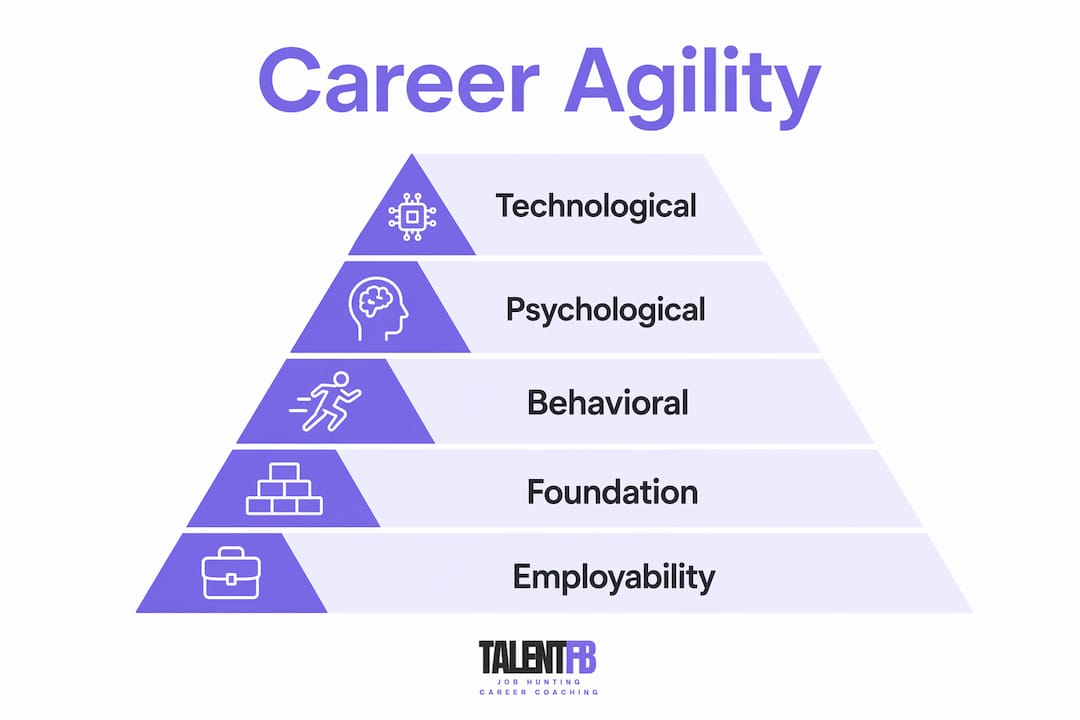
Research grounded in the BE(A)ST framework identifies three core dimensions of career agility. Together, they paint a much richer picture than speed alone.
| Dimension | What it means | Why it matters |
|---|---|---|
| Technological adaptability | Comfort and competence with evolving digital tools and platforms | Keeps you employable as automation reshapes roles |
| Agile learning | Iterative, self-directed learning tied to real career goals | Replaces outdated knowledge before it becomes a liability |
| Career navigation | Proactive scanning and steering of your career path | Turns uncertainty into opportunity rather than threat |
According to BE(A)ST framework research, these three competencies form the foundation of employability in volatile, digital-era environments. You cannot rely on just one. A technically skilled professional who never scans the horizon for new opportunities will eventually be caught off guard.
Career agility also has a psychological dimension that most articles overlook. Research by Coetzee and colleagues found that optimism, hope, and resilience are core psychological states that activate career adaptability. In other words, your mindset is not a soft bonus. It is structural. Professionals who approach change with curiosity rather than dread are genuinely more agile, not just more pleasant to work with.
Think of career agility as a posture, not a skill. It is the stance you take toward your entire professional life.
Why career agility matters now more than ever
The argument for career agility is not abstract. The data behind it is hard to ignore, and the personal consequences of ignoring it are real.

High levels of career agility positively activate career adaptability resources, which in turn drive career resilience and satisfaction. This is not a motivational observation. It is a quantitative finding. Professionals with stronger agility profiles report meaningfully higher career satisfaction, even in turbulent conditions.
The workforce context makes this urgency concrete. Organizations are now being pushed to treat skills development as lifelong work, replacing early-career-focused learning models with multi-stage career frameworks. The old linear path, where you learned heavily at the start and then executed for decades, is structurally broken.
The psychological traits that support career agility include:
- Career curiosity: actively exploring your environment and identifying emerging opportunities
- Resilience: recovering from setbacks without losing forward momentum
- Optimism: maintaining a constructive outlook when outcomes are uncertain
- Hope: setting clear goals and generating multiple pathways to reach them
- Flexibility: adjusting strategies without abandoning your core professional identity
“Agility means building a strong strategic foundation to move confidently, embracing failure as learning.” — Ifah Pantitanonta, award-winning creative strategist, via Hudson Weekly
What makes this insight powerful is the word foundation. Career agility is not chaos. It is directed movement from a place of clarity. That distinction changes how you prepare for it entirely. If you want to explore what a major career shift actually involves from a structural standpoint, the senior tech executive’s guide to career transition is worth your time.
How to develop career agility: a practical approach
Building genuine career agility requires deliberate habits, not occasional pivots. Here is a step-by-step framework you can begin applying immediately.
-
Audit your three dimensions. Score yourself honestly on technological adaptability, agile learning, and career navigation. Where is your weakest link? That is where to start, not where you are already comfortable.
-
Set iterative learning goals. Rather than one large annual development plan, set 30 to 60 day learning sprints tied to specific gaps. The shorter cycle forces you to evaluate progress and adjust direction before too much time is lost.
-
Scan your field weekly. Spend 20 minutes each week reading about your industry’s direction. Not news about your current role, but news about where the field is heading in 18 to 36 months. This is career navigation in practice.
-
Build technological fluency deliberately. You do not need to master every new tool. You need to maintain a comfort level with adopting them. Experimenting with AI tools in low-stakes tasks builds the psychological ease that agility requires. Understanding soft skills as a career asset can also deepen your adaptability in ways pure technical training misses.
-
Reflect after every major career decision. Agile career developers do not just act. They actively influence their direction through creativity and strategic reflection on future scenarios. A 10-minute written debrief after a key decision builds this muscle over time.
-
Engage a coach or advisor. Research consistently shows that professionals who work with career coaches accelerate their agility development. External perspective surfaces blind spots that internal reflection cannot.
Pro Tip: The Institute for Adult Learning and JobTech have developed a career agility profiling tool designed to measure your ability to cope with workplace change. Use it diagnostically, not as a static label. The goal is to identify specific experiments to run, not to categorize yourself.
Common misconceptions about career agility
The biggest myth about career agility is that it means job-hopping or pivoting impulsively. That framing conflates agility with restlessness, and they are not the same thing at all.
True career agility involves deliberate, reflective movement. Professionals who change roles every 18 months without a clear strategic thread are not agile. They are reactive. The distinction matters because reactive professionals often carry a reputation that limits their options, while genuinely agile professionals are sought out precisely because they handle change gracefully.
Here are the misconceptions worth challenging directly:
- “Agility means always being open to change.” Not exactly. It means being open to purposeful change. Protecting what is working is part of agility too.
- “If you are not learning something new constantly, you are not agile.” This confuses volume with direction. Learning the wrong things actively hinders agility by consuming time and attention that should go elsewhere.
- “Passion alone drives agility.” Purpose matters enormously, but agility also requires analytical thinking, scenario planning, and the willingness to be wrong about your own assumptions.
- “Agility is mostly for younger professionals.” Senior professionals with deep expertise have a structural advantage here. Their foundation is larger. The task is redirecting it, not building from scratch.
Managing discomfort is central to this work. Career agility does not eliminate uncertainty. It changes your relationship with it. The professionals who grow most consistently are those who treat uncertainty as information rather than threat.
Career agility vs. related concepts
Career agility is frequently confused with two related but distinct ideas: career flexibility and career adaptability. Understanding the differences sharpens your thinking about all three.
Career flexibility definition: Career flexibility generally refers to structural willingness to adjust working conditions, such as hours, location, or role scope. It is primarily about external arrangements. A professional who works remotely or takes on a portfolio career has career flexibility. That does not automatically make them agile.
What is career adaptability: Career adaptability is a broader psychological construct describing your readiness and resources to manage career transitions. Think of it as the reservoir career agility draws from.
| Concept | Focus | Level | Primary driver |
|---|---|---|---|
| Career flexibility | Work arrangements and structure | External | Organizational policy and personal preference |
| Career adaptability | Psychological readiness for transitions | Internal | Resilience, curiosity, confidence |
| Career agility | Active growth through continuous change | Behavioral + psychological | Technological adaptability, agile learning, navigation |
Career agility sits at the intersection of mindset and behavior. It encompasses career adaptability but adds the active, forward-moving component of continuous skill development and career navigation. Lifelong learning is the fuel. Career agility is the engine. A growth mindset, the belief that abilities can be developed through dedication, is the ignition.
Professionals who understand this distinction stop asking “Am I flexible enough?” and start asking “Am I growing in the right direction?” That is a more productive question, and it tends to produce better outcomes.
My honest take on career agility after years in the field
I’ve worked with hundreds of senior technology professionals navigating career transitions, and I want to share something that rarely appears in formal research. The professionals who develop the strongest career agility are almost never the fastest learners. They are the most honest ones.
What I mean by that: the habit of accurate self-assessment, seeing your strengths and gaps without ego distortion, is the foundation that everything else is built on. I’ve seen technically brilliant professionals plateau because they couldn’t honestly name what they didn’t know. I’ve also seen professionals with average technical depth build extraordinary careers because they tracked their own development with real precision.
The second thing I’ve learned is that agility without confidence collapses under pressure. When the market shifts or a role disappears, professionals need not just the skills to adapt but the belief that adapting is within their reach. That psychological dimension is not a personality trait you either have or don’t. It is built through small, repeated experiences of successfully navigating change. Every time you learn something new, scan a new opportunity, or make a deliberate career move and reflect on it honestly, you are building that belief.
My honest recommendation: treat strategic career growth not as a destination but as a system you maintain. The professionals I admire most are not the ones who landed the perfect role. They are the ones who built the capacity to find the next right move, whatever conditions they faced.
— Frederic
How Talentfb helps you build real career agility
If this article has made one thing clear, it is that career agility requires more than reading about it. It requires a structured approach, honest diagnostics, and expert support at the moments that matter most.
Talentfb’s AI Job Search Accelerator is designed specifically for senior technology professionals who want to move faster and smarter. From resume and LinkedIn optimization to targeted outreach strategies built around your individual profile, the approach is structured to produce interview results within 90 days. If you want to see what that looks like in practice, the client success stories are worth reviewing. For professionals ready to take immediate action, the AI Job Search Playbook is a practical starting point that puts career agility principles directly into your job search.
FAQ
What is career agility in simple terms?
Career agility is your ability to continuously grow and redirect your professional path as your work environment changes. It combines technological adaptability, agile learning, and proactive career navigation into a single, behavioral mindset.
How is career agility different from career adaptability?
Career adaptability describes your psychological readiness to handle career transitions. Career agility adds an active, behavioral dimension, specifically the ongoing habits of learning, technology adoption, and career scanning that keep you growing through change.
Why is career agility important for senior professionals?
Senior professionals face role disruption, leadership transitions, and rapid technological change all at once. Career agility activates resilience and career satisfaction, making it a direct factor in long-term professional success.
Can career agility be measured?
Yes. Diagnostic tools like the IAL and JobTech career agility profiling tool assess your capacity to cope with workplace change across specific dimensions, giving you a practical starting point for targeted development.
What are the key career agility skills to develop?
The core skills include technological adaptability, agile and self-directed learning, and proactive career navigation. These are supported by psychological traits such as optimism, resilience, and career curiosity, all of which can be developed deliberately over time.