TL;DR:
- Behavioral coaching is a structured, evidence-based approach that targets observable behaviors to create lasting change. It emphasizes measurable goals, stakeholder feedback, and environmental adjustments, making progress objectively trackable. This method enhances leadership effectiveness, habit sustainability, and organizational performance through precise, data-driven techniques.
Behavioral coaching is defined as a structured, evidence-based approach that targets observable, measurable behaviors to drive lasting personal and professional change. Unlike general coaching, which often focuses on mindset or motivation, behavioral coaching uses tools like 360-degree feedback, habit-change frameworks, and operant conditioning principles to produce results you can actually track. A specialized form called Cognitive Behavioral Coaching (CBC) has grown significantly in popularity, integrating psychological techniques to reframe limiting beliefs alongside behavior change. The coaching industry itself is projected to grow at over 6% annually as of 2025. That growth reflects a real shift: professionals want coaching that delivers measurable outcomes, not just inspiration.
What is behavioral coaching and how does it work?
Behavioral coaching is a coaching methodology grounded in the science of behavior change. The process begins with 360-degree feedback or direct observation to establish a clear baseline of current behaviors. This baseline matters because, without it, you are essentially coaching in the dark.

From there, a behavioral coach works with you to set specific, observable goals. These are not vague aspirations like “be a better leader.” They are concrete targets like “reduce interrupting colleagues in meetings” or “respond to direct reports within 24 hours.” The specificity is what makes the method work.
The process also relies on operant conditioning principles with environmental adjustments to reinforce desired behaviors. Think of it as designing the conditions for success rather than relying on willpower alone. A coach might help you restructure your calendar, change how you open meetings, or build a simple daily check-in habit.
Progress is not self-reported. Behavioral coaching outcomes are evaluated by pre-selected key stakeholders, not just the person being coached. That external perspective removes blind spots and keeps the process honest.
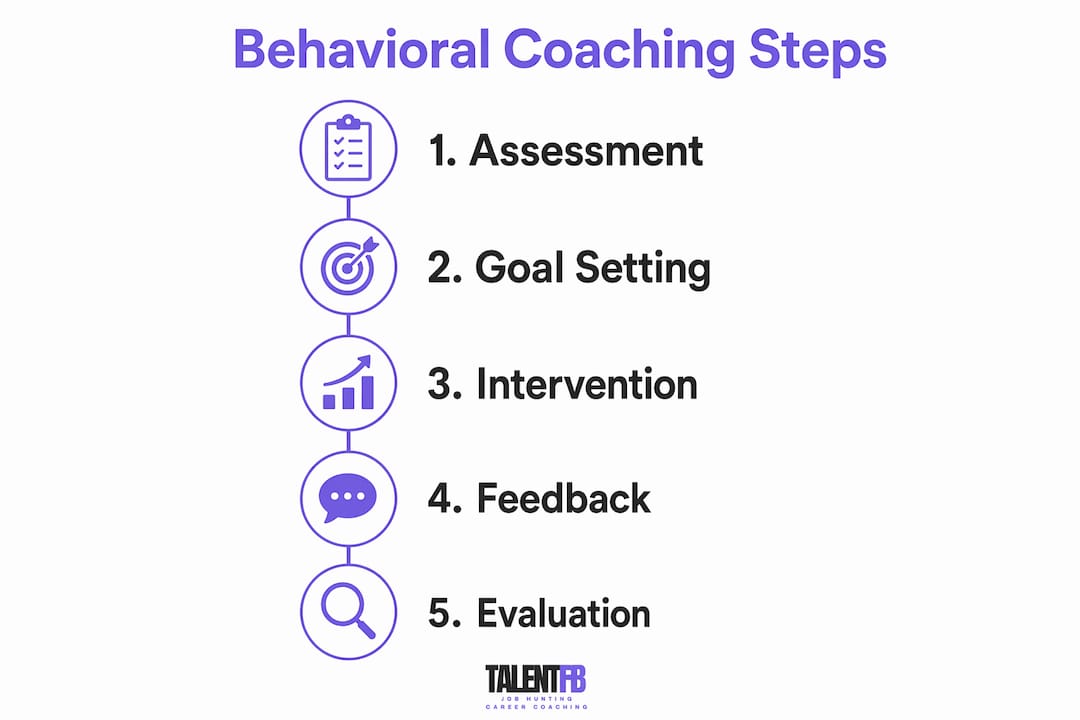
The five core steps in a behavioral coaching engagement
- Baseline assessment. The coach collects 360-degree feedback or observes behaviors directly in the workplace.
- Goal definition. You and your coach identify two to four specific, measurable behaviors to change.
- Structured sessions. Regular coaching conversations focus on those behaviors, not general performance.
- Stakeholder feedback loops. Mini-surveys with stakeholders within six months measure targeted progress.
- Reinforcement and adjustment. The coach helps you refine habits and environmental cues based on real feedback data.
Pro Tip: Ask your coach upfront how progress will be measured. If the answer is vague, that is a red flag. Effective behavioral coaching always ties outcomes to observable, stakeholder-verified data.
What are the benefits of behavioral coaching?
The benefits of behavioral coaching show up at both the individual and organizational level. For professionals, the most immediate gain is clarity. You stop working on everything and start working on the two or three behaviors that actually move the needle in your career or leadership role.
Here is what the research and practice consistently show:
- Higher client retention for coaches. Professionals using Cognitive Behavioral Coaching report up to 32% higher client retention than those using generic methods. That number reflects the real-world value clients experience.
- Improved leadership effectiveness. Leaders using CBC improve team stress management, conflict resolution, and build greater resilience across their organizations.
- Sustainable habit change. Because behavioral coaching targets the environment and reinforcement patterns, not just motivation, the changes tend to stick long after the coaching engagement ends.
- Better conflict management. Behavioral coaching gives leaders a concrete framework for addressing interpersonal friction without relying on instinct or avoidance.
- Stronger team creativity. When leaders reframe uncertainty as a growth signal rather than a threat, their teams follow. Behavioral coaching builds that reframing capacity systematically.
For organizations, the value of hiring coaches who use behavioral frameworks is measurable. You get leaders who can point to specific behavior changes, not just report that they “feel more confident.”
One more benefit worth naming: accountability. Behavioral coaching creates a feedback structure where your stakeholders are part of the process. That shared accountability changes the dynamic entirely. You are not just reporting to a coach. You are reporting to the people you work with every day.
Behavioral coaching vs. traditional coaching and therapy
Understanding the differences between behavioral coaching, traditional coaching, and therapy helps you choose the right support for your situation.
| Approach | Focus | Methods | Best for |
|---|---|---|---|
| Behavioral coaching | Observable, measurable behaviors | 360-degree feedback, habit frameworks, stakeholder surveys | Workplace performance, leadership development |
| Traditional coaching | Goals, mindset, motivation | Conversation, reflection, goal setting | Career transitions, general growth |
| Cognitive Behavioral Coaching (CBC) | Thoughts AND behaviors | Cognitive restructuring, behavioral tools | Limiting beliefs affecting performance |
| Behavioral therapy | Mental health, clinical issues | CBT, exposure therapy, clinical assessment | Anxiety, depression, clinical conditions |
The clearest distinction is between behavioral coaching and behavioral therapy. Therapy addresses clinical mental health conditions and is conducted by licensed clinicians. Behavioral coaching is not therapy. It operates in the professional development space and focuses on performance-relevant behaviors in workplace or personal growth contexts.
Cognitive Behavioral Coaching sits at an interesting intersection. It integrates psychological tools to reframe limiting beliefs and challenge unproductive thought patterns, but it does so within a coaching framework rather than a clinical one. CBC is the right choice when your behaviors are being driven by deeply held assumptions about yourself or your capabilities.
Traditional coaching, by contrast, tends to be more exploratory and less structured around measurement. It works well for general career reflection or motivation. But if you need to change specific behaviors that are holding back your performance, behavioral coaching delivers more precise results.
Pro Tip: If you are unsure whether you need coaching or therapy, ask yourself this: “Is this a performance issue or a mental health issue?” Coaching addresses the former. A licensed therapist addresses the latter. The two are not interchangeable.
How to apply behavioral coaching techniques for personal development
You do not need a formal coaching engagement to start applying behavioral coaching principles. The core techniques are accessible and practical for anyone serious about career advancement or personal growth.
- Track your behaviors, not just your outcomes. Instead of measuring whether you got the promotion, measure the specific behaviors that lead to it. How often are you speaking up in leadership meetings? How consistently are you following up with key stakeholders?
- Seek structured feedback from colleagues. Ask two or three trusted colleagues to give you honest input on one specific behavior you are working to change. This mirrors the stakeholder feedback loop used in formal behavioral coaching.
- Identify your automatic negative thoughts. A key breakthrough in CBC is becoming aware of ANTs (automatic negative thoughts) and reframing them. When you catch yourself thinking “I am not ready for that role,” examine the evidence. Is that thought accurate, or is it a habit?
- Design your environment for success. If you want to be more responsive to your team, remove friction. Set a specific time block for responses. Put it in your calendar. Behavioral change is easier when the environment supports it.
- Use mini-surveys for self-accountability. Every 60–90 days, ask a small group of colleagues whether they have noticed improvement in the specific behavior you are working on. The feedback will surprise you and keep you honest.
“If a behavior cannot be objectively measured, it cannot be effectively coached.” This principle from behavioral coaching research is the most important thing to internalize. Vague goals produce vague results.
For professionals in tech, fintech, or leadership roles, these techniques are especially relevant during career transitions. When you are moving from an individual contributor role to a VP or Director position, the behaviors that made you successful before are often not the ones that will make you successful next. Behavioral coaching helps you identify and build the new behaviors your next role actually requires. Exploring a performance coaching guide can help you see how these frameworks apply across different leadership contexts.
Why I believe behavioral coaching is the most underused tool in professional development
I have spent 15 years inside hiring rooms across tech, fintech, and adtech in APAC. I have seen hundreds of talented professionals plateau not because they lacked intelligence or ambition, but because they kept repeating the same behaviors that stopped working at a certain level of seniority.
The honest truth is that most professionals do not know what specific behaviors are holding them back. They get vague feedback like “you need to be more strategic” or “work on your executive presence.” Those phrases mean almost nothing without a behavioral definition attached to them. What does “executive presence” look like in a Monday morning leadership meeting? What specific behaviors signal it? That is the question behavioral coaching answers.
What I find most powerful about this approach is the stakeholder feedback component. When your colleagues and direct reports are part of measuring your progress, the coaching stops being a private exercise and becomes a shared commitment. That shift in accountability is where real change happens.
I also want to be honest about the pitfalls. Behavioral coaching only works if you are genuinely willing to be measured. Some professionals go through the motions but resist the feedback. They want to feel like they are growing without actually changing anything visible to others. That approach wastes everyone’s time.
My recommendation: if you are serious about your next career move or leadership transition, do not wait for your company to offer coaching. Seek it out yourself. The professionals I have seen make the biggest leaps are the ones who took ownership of their own development before anyone asked them to.
— Frederic Bonifassy
How TalentFB supports your behavioral growth and career transition
If this article has clarified what behavioral coaching is and why it matters, the natural next step is applying these principles to your own career trajectory.
TalentFB’s coaching programs for senior tech professionals are built on exactly these frameworks: measurable goals, structured feedback, and behavior-specific strategies that produce results within 90 days. Whether you are a Director, VP, or Senior Manager navigating a leadership transition, the career coaching guide for tech executives walks you through how evidence-based coaching frameworks apply to your specific situation. With 350+ professionals coached and a track record of 20–30% salary increases, TalentFB gives you the playbook, not just the motivation.
FAQ
What is a behavioral coach?
A behavioral coach is a trained professional who uses structured, data-driven methods to help clients identify and change specific observable behaviors. Unlike general coaches, behavioral coaches rely on tools like 360-degree feedback and stakeholder surveys to measure progress objectively.
How does behavioral coaching differ from therapy?
Behavioral coaching focuses on professional performance and measurable behavior change in workplace or personal development contexts. Therapy addresses clinical mental health conditions and is conducted by licensed clinicians. The two serve different needs and are not interchangeable.
What is Cognitive Behavioral Coaching (CBC)?
Cognitive Behavioral Coaching integrates psychological tools to reframe limiting beliefs alongside behavioral change techniques. It is designed for professionals whose performance is affected by unproductive thought patterns, not just habits or skills gaps.
How long does a behavioral coaching engagement typically last?
Most behavioral coaching engagements run for six months or more, with stakeholder mini-surveys conducted at the midpoint to measure progress. The timeline reflects the reality that sustainable behavior change requires consistent reinforcement, not a single session.
Can I practice behavioral coaching techniques on my own?
Yes. You can apply core techniques independently by tracking specific behaviors, seeking structured feedback from colleagues, and identifying automatic negative thoughts that drive unproductive patterns. Formal coaching accelerates the process, but the principles are accessible to anyone willing to measure their own progress honestly.