
TL;DR:
- Career advancement in tech now emphasizes strategic clarity, deliberate positioning, and boundary-crossing.
- Four main paths include deepening technical expertise, moving into management, pivoting to high-growth domains, or building visibility.
- Success depends on making impact visible, building sponsorship, and timing moves to organizational needs.
The technology industry is rewriting its own rulebook faster than most executives can keep pace. Senior professionals who built their careers on a single track, whether deep technical mastery or people leadership, now face a landscape where executive hiring has dropped sharply and AI is reshaping which roles get funded. Advancement in 2026 is not simply about earning the next title. It requires strategic clarity, deliberate positioning, and a willingness to move across boundaries that once felt fixed. This article walks you through the criteria for defining your path, the most effective strategies available, a direct comparison of each, and the execution tactics that separate those who advance from those who wait.
Table of Contents
- Clarify your target: Defining advancement in tech
- Explore your options: Modern strategies for upward mobility
- Side-by-side: Comparing advancement strategies for tech leaders
- Make your move: Tactics for a strategic career pivot
- The overlooked truth about tech career advancement
- Accelerate your advancement with expert support
- Frequently asked questions
Key Takeaways
| Point | Details |
|---|---|
| Define advancement goals | Clarifying your desired impact and ambitions is crucial for strategic career moves. |
| Understand dual tracks | Tech leaders now choose between advanced IC and management paths for upward mobility. |
| Leverage market shifts | AI and efficiency trends have boosted IC opportunities while shrinking traditional executive roles. |
| Use tactical pivots | Strategic timing, influence, and upskilling are keys to successful career transitions. |
| Seek expert guidance | Specialized coaching and resources can dramatically accelerate tech leadership advancement. |
Clarify your target: Defining advancement in tech
Before you can move forward, you need to know what forward actually means for you. Advancement looks different depending on your ambitions, your strengths, and the organization you are in. For some senior professionals, it means deeper technical influence and the title of Distinguished Engineer. For others, it means owning a P&L and sitting at the executive table. Neither path is superior. Both require intentional pursuit.
Today’s most forward-thinking tech companies have formalized this reality through the dual career track model. Dual career tracks are standard in tech: the Individual Contributor path runs from Senior to Principal and Distinguished Engineer, while the Management path runs from Director to VP and CTO. This structure allows advancement without forcing talented technologists into management roles they may not want or excel in.
Before committing to a direction, ask yourself these clarifying questions:
- Do you find your greatest satisfaction in solving hard technical problems, or in enabling others to solve them?
- Are you energized by organizational influence, or does deep domain expertise feel more meaningful?
- What does your current reputation signal to your peers and leadership?
- Which path aligns with your five-year financial and lifestyle goals?
Your answers will reveal more than you expect. Many senior professionals discover they have been chasing a track based on external pressure rather than genuine fit. Understanding the range of tech career paths available today is the first step toward making a choice that actually holds.
It is also worth noting that the boundaries between tracks are more permeable than they used to be. Working with executive recruiters in tech can surface opportunities that blend both, such as a Principal Architect role with direct influence over product strategy, or a VP of Engineering position that still requires hands-on technical credibility. The key is to define advancement on your own terms before the market defines it for you. Understanding your talent pipeline advantage early gives you a structural edge over peers who are simply reacting to job postings.
“The most dangerous career move a senior tech professional can make is optimizing for a path they never consciously chose.”
Explore your options: Modern strategies for upward mobility
Once you have clarity on what advancement means for you, the next step is understanding the full menu of strategic options. Not all of them are equally available in the current market, and some require more preparation than others.
Here are the four primary advancement strategies for senior tech professionals in 2026:
- Climb the IC ladder. Pursue Principal, Staff, or Distinguished Engineer roles by deepening your technical domain, publishing thought leadership, and solving problems with organization-wide impact. This path has gained significant momentum as exec hires dropped from 8% to 4% of new hires between 2018 and 2025, while IC roles grew from 46% to 57% of total tech hiring.
- Move into management. Transition into Director, VP, or C-suite roles by building your leadership track record, sponsoring high-visibility projects, and developing organizational credibility. This path is more competitive than it was five years ago, but it remains viable for those who can demonstrate measurable business impact.
- Pivot to high-growth domains. Shift your expertise toward AI, machine learning, cybersecurity, or cloud infrastructure, where demand continues to outpace supply. Lateral moves into these areas can accelerate both compensation and influence. Review a career progression framework to understand how these transitions are structured in leading firms.
- Elevate your visibility. Pursue board advisory roles, speaking engagements, open-source leadership, or industry publications. Thought leadership at this level creates inbound opportunities that no job board can replicate.
Pro Tip: Before investing heavily in upskilling for a new domain, map the internal problem statements your current organization is trying to solve. Positioning yourself as the person who bridges an existing gap is faster and more credible than starting from scratch externally.
Your AI Job Search Playbook and a structured career development checklist can help you prioritize which of these strategies fits your current positioning and timeline.
Side-by-side: Comparing advancement strategies for tech leaders
With a clear picture of the available options, a structured comparison helps you weigh the trade-offs honestly. Tech companies offer dual ladders with compensation parity at senior levels, which means the financial argument for choosing management over IC has weakened considerably.

| Strategy | Progression pace | Core skills required | Compensation ceiling | Future resilience |
|---|---|---|---|---|
| IC ladder | Moderate to slow | Deep technical expertise, systems design, mentorship | Very high (Distinguished/Fellow level) | Strong, especially in AI-adjacent roles |
| Management track | Fast if sponsored | People leadership, business acumen, communication | Very high (VP/CTO) | Moderate, more exposed to restructuring |
| Lateral/domain pivot | Variable | Adaptability, cross-functional knowledge, learning agility | High, depending on domain | Very strong in high-demand areas |
| Thought leadership/board | Slow to build, then compounding | Communication, credibility, network depth | High (advisory equity, board fees) | Very strong, market-independent |
A few key observations from this comparison:
- Management roles carry more organizational risk. When companies restructure, middle and senior management layers are often the first to shrink. IC roles at the Principal and Staff level are harder to eliminate because they are tied to specific technical outcomes.
- Lateral moves are underrated. Many senior professionals overlook the pivot option because it feels like a step sideways. In practice, moving into a high-demand domain often results in a faster compensation increase than waiting for an internal promotion.
- Thought leadership compounds over time. It requires patience, but executives who build public credibility through writing, speaking, or open-source contributions create career optionality that no single employer can take away.
For a deeper look at how to position yourself for a tech leadership job search, it is worth auditing how your current profile maps against each of these paths before committing.
Make your move: Tactics for a strategic career pivot
Identifying your strategy is only the beginning. The real differentiator is executing the next steps with precision. Timing, sponsorship, and visibility all play critical roles in whether your pivot lands or stalls.
| Strategy | Timing signal | Key tactic | Common roadblock |
|---|---|---|---|
| IC ladder | After delivering a high-visibility project | Document and publicize impact metrics | Being seen as “too specialized” |
| Management track | During org expansion or leadership gap | Volunteer to lead cross-functional initiatives | Lack of formal management experience |
| Lateral/domain pivot | When a new domain aligns with org priorities | Upskill publicly, contribute to internal pilots | Credential gap perception |
| Thought leadership/board | When you have a distinct point of view | Publish, speak, and build a consistent presence | Inconsistent effort over time |
Timing matters more than most professionals realize. Headcount reductions at Series A SaaS companies have dropped teams from 26 to 16 in some cases, which means internal pivots must be timed to organizational need, not personal readiness alone.
Building the right advocates is equally important. Sponsorship, meaning someone who actively promotes you in rooms you are not in, is different from mentorship. Identify two or three senior leaders who have visibility into the work you want to do next, and create deliberate touchpoints with them.
Pro Tip: Your existing technical brand travels across tracks. If you are known for solving ambiguous, high-stakes problems, that reputation is an asset whether you are pursuing a Staff Engineer role or a VP position. Do not rebuild your identity from scratch. Extend it.
Understanding talent acquisition strategies from the hiring side also gives you a sharper sense of what decision-makers are actually evaluating when they consider senior candidates for pivots.
The overlooked truth about tech career advancement
Here is what most career advice gets wrong: at the senior level, advancement is rarely blocked by a skills gap. It is blocked by a visibility gap. The professionals who move fastest are not always the most technically brilliant or the most experienced managers. They are the ones who make their impact legible to the people who control advancement decisions.
The moves that actually open doors are often the ones that feel unglamorous. Fixing a broken cross-team process. Mentoring a junior engineer through a high-stakes project. Bridging the communication gap between product and engineering. These contributions build the kind of organizational trust that sponsors act on.
Most executives focus on their next role when they should be focused on their next reputation. The market in 2026 rewards professionals who demonstrate systems thinking, not just functional expertise. If you want to understand how a reversed job search system can shift your positioning from reactive to strategic, the mindset shift starts here. Stop waiting to be discovered. Start engineering the conditions under which discovery becomes inevitable.
Accelerate your advancement with expert support
For senior professionals ready to move from strategy to action, having the right support structure makes a measurable difference. Career advancement at the executive level is not a solo endeavor.
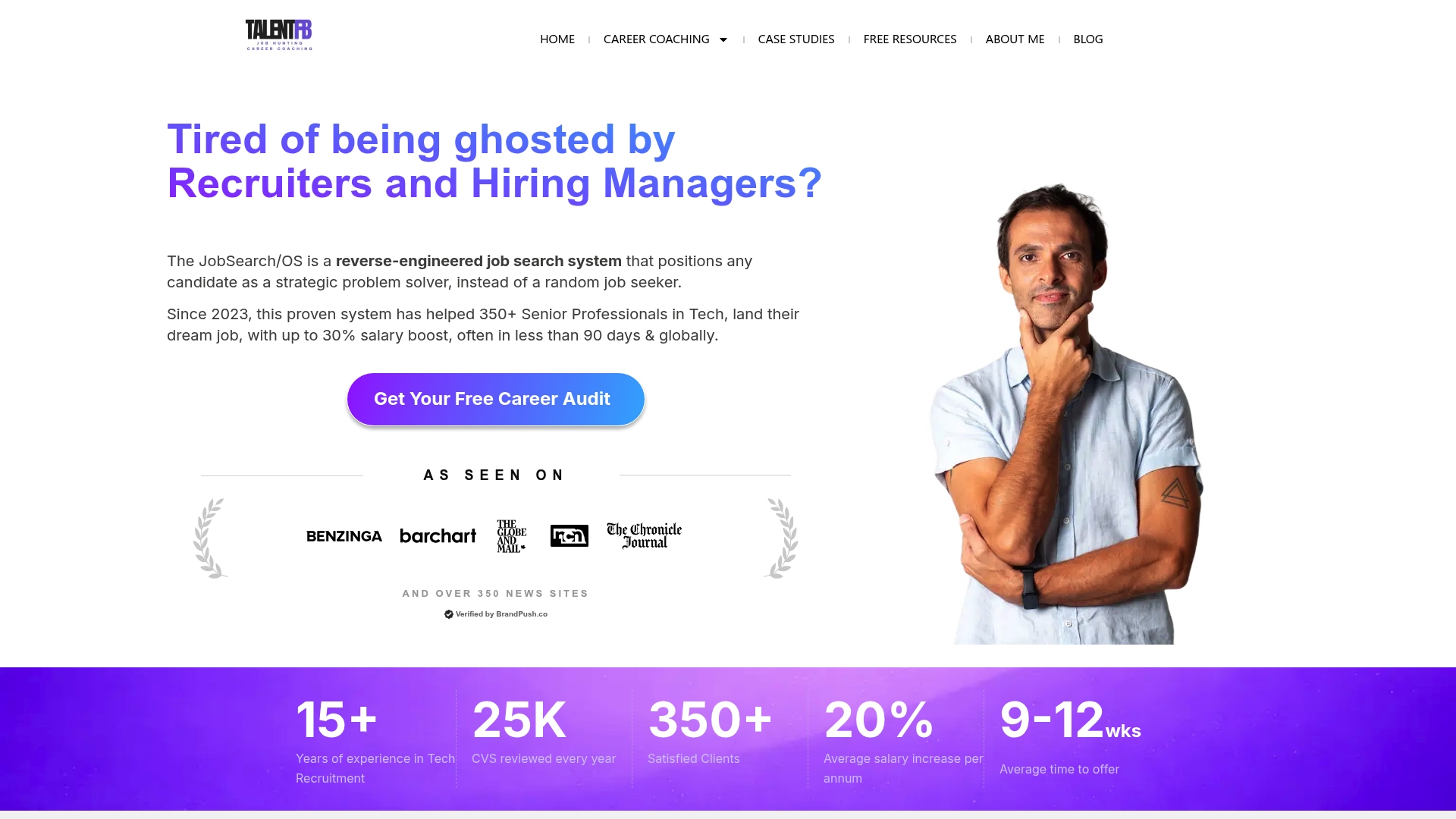
TalentFB’s executive coaching sessions are built specifically for tech leaders navigating IC to management transitions, industry pivots, and high-stakes job searches. The leadership job search guide provides a structured roadmap for positioning yourself in a competitive market, while the AI Job Search Playbook helps you leverage AI tools to accelerate your outreach and visibility. Whether you are targeting your next internal promotion or an external move, personalized guidance can compress your timeline significantly.
Frequently asked questions
What is the difference between the IC and management career tracks in technology?
The IC track advances through deepening technical expertise, moving from Senior to Principal or Distinguished Engineer, while the management track builds organizational leadership from Director to VP or CTO. Both offer comparable compensation and status at senior levels in leading tech firms.
Are there still opportunities for executive roles in tech with AI and efficiency changes?
Yes, but the landscape has shifted. Executive hiring has declined from 8% to 4% of new hires, while high-level IC roles have expanded, so targeted positioning and strategic visibility matter more than ever.
What’s the best way to stand out for career advancement as a tech executive?
Building consistent visibility through thought leadership, fostering strategic sponsorship relationships, and demonstrating adaptability to new business models are the most effective differentiators at the senior level.
How quickly can a senior tech professional transition between tracks?
Timeline varies widely. Some professionals complete a lateral move within a year by aligning their pivot with an organizational need, while others take two or more years depending on the depth of upskilling required and the structure of their current organization.