
TL;DR:
- Diversity in tech hiring drives better financial performance, innovation, and problem-solving.
- Overcoming unconscious bias and expanding diverse candidate pipelines are key challenges.
- Using structured interviews and careful AI oversight can promote fairness and reduce bias.
Diversity in tech hiring is not a compliance checkbox. It is one of the most powerful levers available to talent acquisition leaders who want to build organizations that outperform, innovate faster, and attract the best candidates on the market. Yet many HR and TA professionals in the technology sector still approach diversity as a regulatory obligation rather than a strategic advantage. This guide challenges that mindset directly, offering evidence-based strategies, practical frameworks, and honest perspective on what it truly takes to build inclusive hiring programs that produce lasting results.
Table of Contents
- Why diversity matters in tech talent acquisition
- Challenges and barriers to inclusive hiring goals
- The impact of technology and AI in diverse recruitment
- Structured interviews: Minimizing bias and promoting fairness
- Strategic steps to embed diversity in the talent acquisition lifecycle
- Hard-won lessons: What most tech talent leaders miss about diversity
- Next steps: Tools and resources for tech hiring success
- Frequently asked questions
Key Takeaways
| Point | Details |
|---|---|
| Diversity boosts performance | Tech companies with high diversity outperform competitors by up to 39 percent. |
| Structured interviews reduce bias | Standardized interview methods drive fairness and minimize hiring subjectivity. |
| AI can help and harm | AI expands candidate pools but must be audited to avoid reinforcing historical biases. |
| Real progress demands leadership | Leadership commitment and ongoing measurement are key to sustained diversity gains. |
| Practical steps accelerate results | Actionable strategies like inclusive sourcing and KPIs drive diversity from start to finish. |
Why diversity matters in tech talent acquisition
The business case for diversity is no longer theoretical. Research consistently shows that organizations with more diverse leadership and workforces achieve stronger financial performance, make better decisions, and sustain higher levels of innovation. For talent acquisition leaders operating in the technology sector, this is not just encouraging data. It is a competitive imperative.
Diversity in hiring means more than gender balance or ethnic representation, though both matter significantly. It also includes cognitive diversity (how people think and solve problems), neurodiversity, socioeconomic background, educational pathway, and professional experience. When you bring together people with genuinely different perspectives and life experiences, the team’s collective problem-solving capacity expands in ways that homogeneous groups simply cannot replicate.
The numbers back this up. Companies in the top quartile for diversity are 39% more likely to outperform their peers on profitability for gender diversity, and 35% more likely when it comes to ethnic diversity. These are not marginal gains. They represent a meaningful performance gap between organizations that prioritize inclusive hiring and those that do not.
Here is what diverse teams actually deliver for tech organizations:
- Broader problem-solving approaches because team members bring different reference points
- Greater product innovation since diverse teams better reflect the diversity of end users
- Stronger employer brand that attracts high-caliber candidates across all demographics
- Lower groupthink risk, which is especially critical in high-stakes technical decisions
- Better retention when employees see themselves represented at all levels of the organization
As one researcher put it: “Diversity is not an add-on to business strategy. It is business strategy.” If your tech talent acquisition strategies are not built around this foundation, you are leaving performance on the table.
With the importance of diversity established, let’s examine the barriers organizations face in achieving it.
Challenges and barriers to inclusive hiring goals
Understanding why diversity goals remain so elusive in tech is essential before you can close the gap effectively. The obstacles are real, layered, and often self-reinforcing. A staggering 44% of recruiting professionals name meeting inclusive hiring goals as their top challenge heading into 2025 and beyond. That statistic tells you something important: this is not a problem that organizations have figured out, even the ones investing heavily in DEI programs.
The most common barriers talent acquisition teams face include:
- Unconscious bias embedded in job descriptions, resume screening, and interview evaluation, often invisible to the people exercising it
- Limited diverse candidate pipelines built from referral networks that tend to reflect the existing workforce demographics
- Legal and compliance uncertainty around affirmative hiring practices, especially as regulatory landscapes shift
- Underutilized or misapplied technology that promises to solve bias but may actually encode it
- Inconsistent leadership commitment where diversity is championed in press releases but not in budget allocations or accountability structures
- Slow and uneven progress despite years of stated commitment, with gains concentrated in entry-level roles rather than leadership positions
Progress on DEI has been notably uneven across the industry. Research shows that while some organizations have made incremental gains, the overall picture remains inconsistent, and legal headwinds are adding new complexity for HR teams trying to operationalize inclusive hiring programs.
Pro Tip: Audit every stage of your recruitment funnel, from job posting language to offer acceptance rates, and track where candidates from underrepresented groups drop out. The drop-off point usually reveals where the bias lives.
Working with experienced C-suite recruiter strategies also offers valuable insight into how executive-level hiring shapes diversity outcomes across the entire organization. Leadership representation sets the tone for every team beneath it.
Understanding these challenges creates a foundation for targeted solutions. Next, let’s explore how technology can be leveraged without inadvertently reinforcing bias.
The impact of technology and AI in diverse recruitment
Technology sits at the center of modern recruitment, and AI tools in particular have generated significant excitement as potential solutions to hiring bias. The promise is real. AI can expand sourcing reach, remove name and demographic data during screening, and identify patterns in successful hires that human reviewers might overlook. In fact, 50% of firms are planning to use technology specifically to diversify their candidate pools.

But the risk is equally real. AI tools can perpetuate bias when they are trained on historical data that reflects past inequities. If your organization’s most successful hires over the past decade have come from a narrow demographic profile, an AI trained on that data will simply replicate those patterns at scale, faster and with more confidence than any human recruiter.
| AI in talent acquisition | Potential rewards | Potential risks |
|---|---|---|
| Resume screening | Faster processing, reduced human fatigue | Encodes historical bias from training data |
| Candidate sourcing | Broader reach across diverse platforms | May favor candidates matching existing profiles |
| Interview scheduling | Removes scheduling friction | Neutral impact on diversity outcomes |
| Predictive analytics | Identifies high-potential candidates | Predictions reflect past workforce demographics |
| Language analysis tools | Flags biased job description language | Requires ongoing calibration and human oversight |
The organizations that get AI right in diverse recruitment follow a consistent set of practices:
- Audit AI tools regularly for disparate impact across demographic groups before and after deployment
- Use diverse training data sets that intentionally represent underrepresented communities
- Maintain human oversight at critical decision points, especially in final-stage evaluations
- Invest in bias training for the people configuring and interpreting AI outputs
Exploring HR tech hiring strategies can help your team understand where technology adds genuine value versus where human judgment remains irreplaceable. If you are evaluating platforms, it is also worth reviewing AI hiring platform alternatives to find tools built with bias mitigation as a core design principle rather than an afterthought.
As the field of recruitment technology matures, the leaders who will build the most diverse teams are those who treat AI as a powerful assistant with known limitations, not an autonomous solution. Technology changes how we recruit, but process improvements also play a pivotal role, particularly structured interviews.
Structured interviews: Minimizing bias and promoting fairness
A structured interview is a standardized approach in which every candidate is asked the same predetermined questions, evaluated against the same scoring criteria, by the same or equivalent panel. This contrasts sharply with unstructured interviews, where conversation flows organically and evaluators rely heavily on subjective impressions. The difference in outcomes is significant and well-documented.
Structured interviews are a key methodology for reducing bias in hiring because they create a consistent, comparable basis for evaluation. When every candidate is assessed on the same dimensions, personal affinity, shared backgrounds, and first-impression bias have far less room to influence the outcome.
The data on adverse impact is compelling. Structured interviews reduce adverse impact with a score of d=0.23 compared to d=0.56 for unstructured approaches. In plain terms, structured interviews are far less likely to disadvantage candidates from underrepresented groups. That is a meaningful equity gain delivered through a process change, not a quota or compliance mandate.
| Factor | Structured interviews | Unstructured interviews |
|---|---|---|
| Consistency | Same questions for all candidates | Varies by interviewer and conversation flow |
| Bias reduction | Significantly lower adverse impact | Higher susceptibility to affinity and halo bias |
| Fairness perception | Candidates report higher perceived fairness | Can feel arbitrary or inconsistent |
| Predictive validity | Strong correlation with job performance | Weaker correlation with actual performance |
| Evaluator training required | Yes, requires calibration and scoring alignment | Lower, but outcomes suffer as a result |
To implement structured interviews effectively in your tech hiring process, follow these steps:
- Define the competencies the role requires, separating technical skills from behavioral and cultural attributes
- Develop standardized questions tied directly to each competency, using behavioral or situational formats
- Create a scoring rubric with clear anchor descriptions for each rating level
- Train all interviewers on the scoring criteria and how to avoid common rating errors
- Debrief as a panel using the rubric, not general impressions, before making a recommendation
Pro Tip: Pilot your structured interview process on a new role before rolling it out organization-wide. Collect interviewer feedback and candidate experience data, then refine the scoring rubric based on what you learn. A process that is calibrated to your specific context will outperform a generic template every time.
For ready-to-use frameworks, structured interview questions designed for tech roles can give your team a strong starting point.
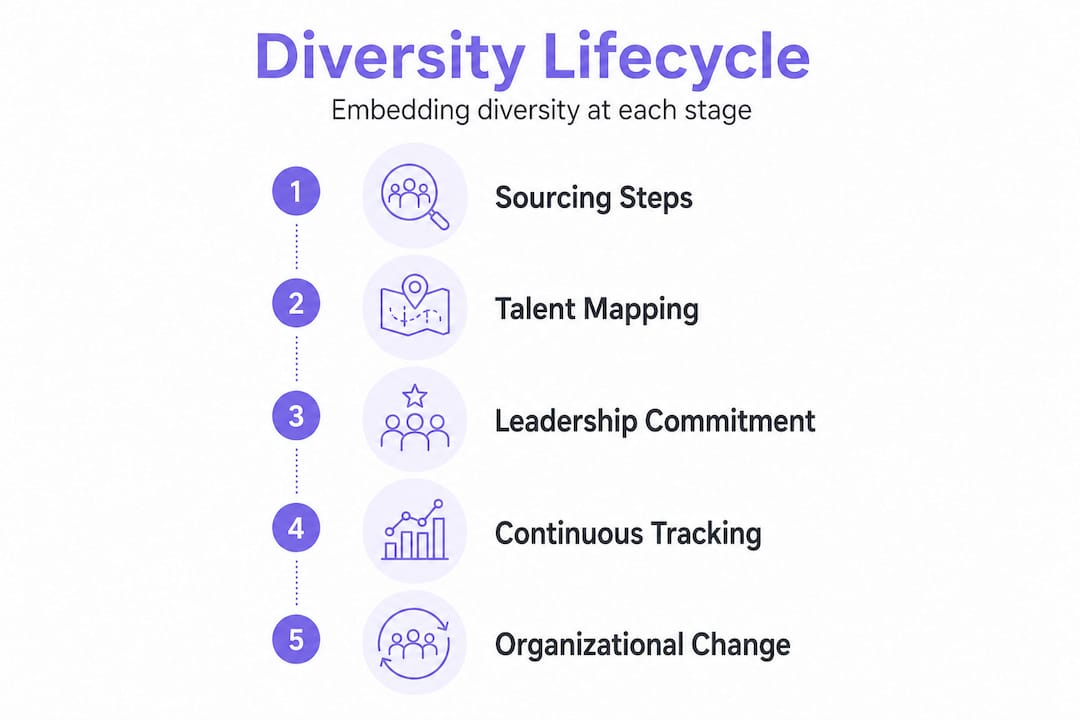
Strategic steps to embed diversity in the talent acquisition lifecycle
Diversity cannot be a single-point intervention. It needs to be woven into every phase of the talent acquisition lifecycle, from how you write job descriptions to how you onboard new hires. Forty-four percent of recruiting professionals continue to struggle with inclusive hiring goals, and one of the primary reasons is that diversity efforts remain isolated rather than integrated.
Here are the practical actions that make the biggest difference:
- Audit job descriptions for exclusionary language, credential inflation, and unnecessarily narrow requirements that screen out qualified candidates from non-traditional pathways
- Diversify sourcing channels by building relationships with HBCUs (Historically Black Colleges and Universities), coding bootcamps, veterans’ organizations, and disability employment networks
- Apply blind resume screening to remove names, addresses, and other demographic signals before evaluation begins
- Establish diverse interview panels so no single evaluator’s perspective dominates the decision
- Set diversity KPIs at every stage, tracking representation from application through offer acceptance, not just at the top of the funnel
- Build inclusive onboarding programs that signal to new hires from day one that their perspective is genuinely valued
- Create accountability structures where hiring managers and executives are evaluated on diversity outcomes, not just hiring speed or headcount
Pro Tip: Do not measure diversity only at the sourcing stage. Track the conversion rate of underrepresented candidates at each stage of the funnel. If you are sourcing diverse candidates but losing them at the interview or offer stage, the problem is not your pipeline. It is your process.
Strong talent sourcing steps and a solid talent mapping guide can help your team build the infrastructure for sustainable diverse pipelines rather than reactive searches when a role opens up.
Leadership commitment is not optional here. When executives treat diversity as a strategic business priority and hold themselves and their teams accountable for outcomes, progress accelerates. When diversity lives only in the HR function, it stalls.
Hard-won lessons: What most tech talent leaders miss about diversity
Here is what years of working inside the talent acquisition space in tech make clear: most diversity initiatives underperform not because they are poorly designed, but because they are poorly positioned within the organization.
Diversity works best when it is owned by the business, not delegated to HR. When a CTO or VP of Engineering personally sponsors inclusive hiring goals, communicates the business rationale to their team, and reviews diversity metrics in their quarterly business reviews, outcomes shift. When diversity lives solely in an HR report that leadership reviews once a year, nothing meaningful changes.
The second hard lesson is that one-off initiatives rarely move the needle. Unconscious bias training delivered once to a team has a documented short shelf life. Companies that see real, sustained progress combine ongoing education, process redesign, accountability structures, and cultural reinforcement. They treat diversity as a capability to build, not a box to check.
The third is about measurement. Most organizations track quantitative diversity metrics, headcount by demographic group, application rates, promotion rates. That matters. But the qualitative signals are equally important. Do employees from underrepresented groups feel their contributions are recognized? Do they see a realistic path to leadership? Are they staying? Inclusion is the soil in which diversity grows, and it requires qualitative measurement to assess honestly.
If you want to build a strategic talent acquisition capability that delivers on diversity at scale, the work is organizational, not transactional. That distinction separates the teams that report incremental gains from the ones that actually transform their workforces.
Next steps: Tools and resources for tech hiring success
The strategies covered in this article represent a real path forward for talent acquisition leaders who are serious about building more inclusive, higher-performing tech organizations. Knowing what to do is one thing. Building the systems, skills, and accountability structures to do it consistently is where the real work happens.
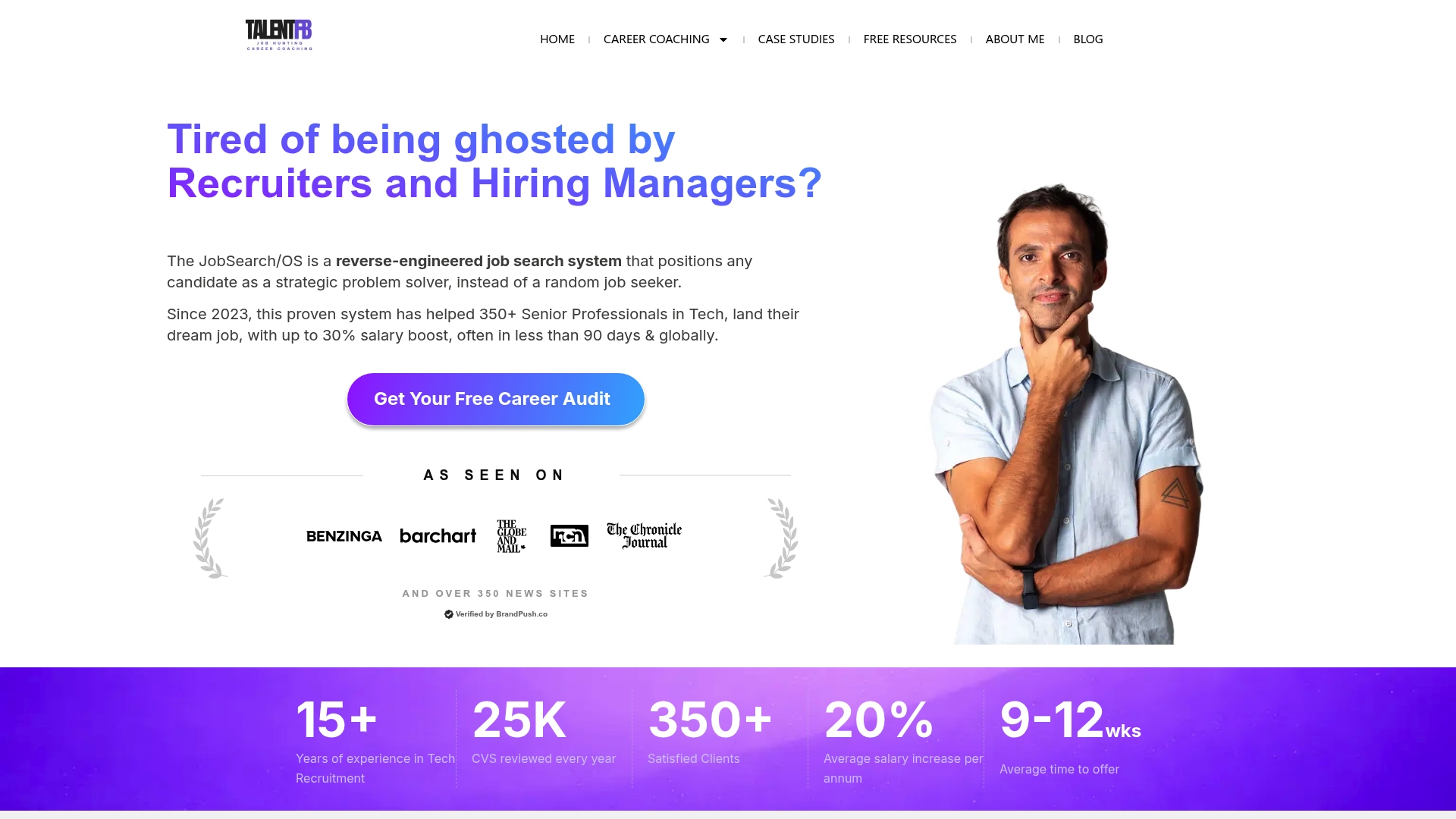
TalentFB offers tools, coaching, and playbooks designed specifically for HR and talent acquisition professionals working in the technology sector. Whether you are a hiring leader refining your approach or a senior professional navigating your own career in TA, the resources here are built to move you forward. Explore the career coaching guide for tech leaders looking to grow their impact, or dig into the AI job search playbook to understand how AI-powered strategies are reshaping recruitment on both sides of the table. The right tools, paired with the right strategy, produce the kind of results that get noticed.
Frequently asked questions
What is the most effective way to reduce hiring bias?
Structured interviews minimize subjectivity and promote fairness by standardizing questions and scoring criteria, consistently outperforming unstructured approaches in reducing adverse impact.
Can AI actually improve diversity in tech hiring?
AI can meaningfully expand diverse candidate pools, but it can also perpetuate bias when trained on historical data that reflects past workforce inequities, making careful design, testing, and human oversight essential.
Why do tech firms struggle to achieve diversity goals?
Unconscious bias, shallow candidate pipelines, and underutilized technology remain the most persistent barriers, compounded by legal uncertainty and inconsistent leadership accountability across the organization.
How do I measure progress on diversity in talent acquisition?
Track the conversion rates of underrepresented candidates at every funnel stage, compare diverse hire outcomes over time, and supplement quantitative data with qualitative signals like employee belonging surveys and retention rates by demographic group.