TL;DR:
- HR analytics transforms workforce data into strategic decisions that improve business outcomes.
- It moves HR from reactive reporting to predictive and prescriptive insights that optimize hiring, retention, and diversity efforts.
HR analytics is defined as the systematic collection, analysis, and interpretation of workforce data to guide strategic business decisions. The industry term is “people analytics,” and both labels describe the same discipline: turning raw HR data into decisions that actually move the needle. The role of HR analytics has shifted from a reporting afterthought to a core driver of organizational performance. SHRM benchmarks and Deloitte research consistently confirm that organizations using data-driven HR practices outperform peers on retention, hiring efficiency, and financial results. If you lead people or run a business, understanding this discipline is no longer optional.
What is the role of HR analytics in modern organizations?
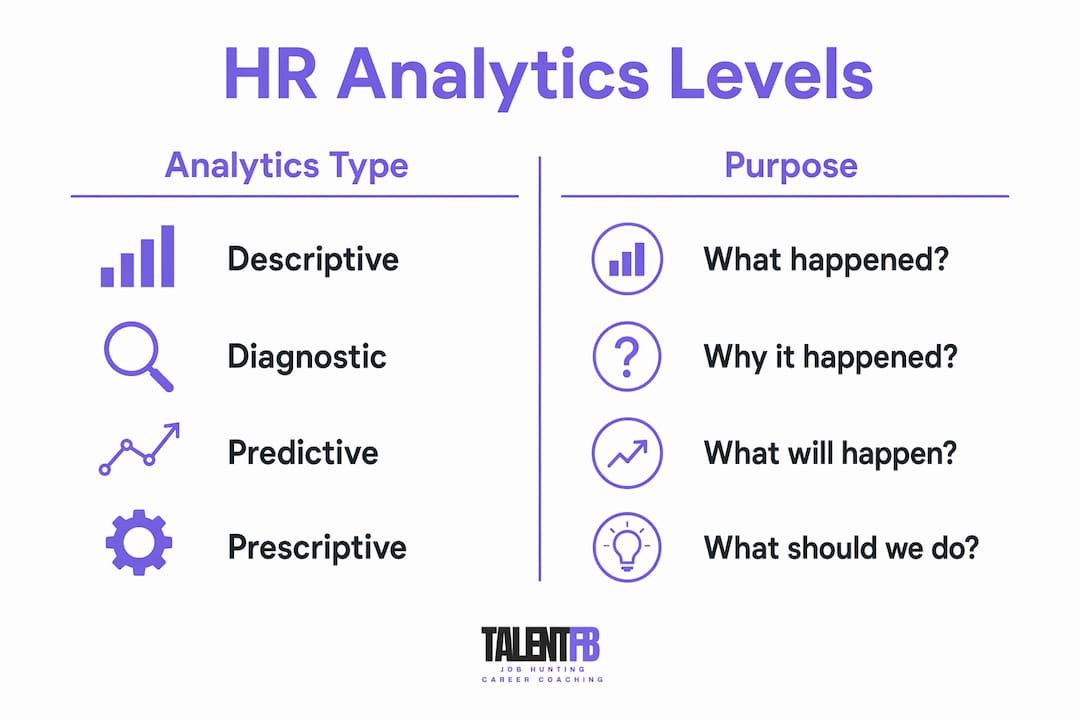
HR analytics functions across four distinct levels, and knowing which level you are operating at tells you exactly how much value you are leaving on the table.

Descriptive analytics answers “what happened.” It covers headcount reports, turnover rates, and absenteeism trends. Most HR teams live here. It is useful, but it is the floor, not the ceiling.
Diagnostic analytics answers “why it happened.” It connects data points to find root causes. For example, cross-referencing exit interview data with manager performance scores can reveal whether attrition clusters under specific leaders.
Predictive analytics answers “what will happen.” Attrition risk models fall here. 82% of organizations use people analytics to address employee retention and turnover. That figure reflects how widely HR teams now accept that waiting for resignations is far more expensive than predicting them.
Prescriptive analytics answers “what should we do.” This is the most advanced level. It recommends specific actions, such as adjusting compensation bands in a particular region before a talent shortage hits.
These four types align directly with core HR functions:
| Analytics type | HR function | Example metric |
|---|---|---|
| Descriptive | Workforce planning | Headcount by department |
| Diagnostic | Performance management | Engagement score vs. productivity |
| Predictive | Retention | Attrition risk score by role |
| Prescriptive | Recruitment | Optimal sourcing channel by hire quality |
Diversity analytics deserves a specific mention. Companies in the top quartile for gender diversity on executive teams have a 39% higher chance of financial outperformance. People analytics tracks representation data and measures whether DEI initiatives actually shift those numbers over time.
Pro Tip: Before building dashboards, map each analytics type to one specific HR problem your organization faces right now. Starting with a problem, not a tool, is what separates useful analytics from expensive noise.
How does HR analytics improve performance and strategic decisions?
The clearest proof of HR analytics impact shows up in recruitment costs. The average cost-per-hire is $5,475 for non-executive roles and $35,879 for executives. Predictive analytics identifies which sourcing channels produce the highest-quality hires at the lowest cost, compressing those figures over time. That is not a marginal efficiency gain. It is a fundamental shift in how HR justifies its budget.
Retention is the other major financial lever. Replacement costs for a departing employee reach 50–200% of their annual salary. When attrition risk models flag employees likely to leave within 90 days, managers can intervene with targeted conversations, project changes, or compensation reviews before the resignation letter arrives.
“Transforming raw data into meaningful metrics is key to shifting HR’s role from administrative to strategic partner.” — Google re:Work People Analytics
The strategic impact extends beyond cost control. Creating meaningful HR metrics transforms HR into a function that shapes business strategy rather than reacting to it. When HR leaders walk into a board meeting with workforce forecasts tied to revenue projections, the conversation changes entirely. They are no longer defending headcount. They are informing growth decisions.
Analytics also protects organizations legally. Failure to move beyond reactive reporting leaves organizations exposed to retaliation and discrimination claims. Proactive pattern detection in case management data catches problems before they escalate into litigation. That risk management function alone justifies the investment for most mid-size organizations.
For diversity hiring in tech, analytics provides the measurement infrastructure that separates genuine inclusion efforts from performative ones. Tracking representation at every stage of the hiring funnel reveals exactly where underrepresented candidates drop off, which makes fixing the problem possible.
What are the common challenges in implementing HR analytics?
Most HR analytics programs fail before they produce a single useful insight. The failure is rarely about technology. It is almost always about foundations.
The most common barriers are:
- Dirty data. Data hygiene and governance are the first major hurdle before advanced analytics can deliver value. Inconsistent job titles, duplicate employee records, and missing fields in legacy HRIS systems make even basic analysis unreliable.
- No clear problem statement. Teams buy analytics platforms and then search for questions to answer. Analytics success depends on starting with problem statements rather than technology. Google’s People Analytics team defines the people problem first, then decides what to measure.
- Skills gaps. Most HR professionals were not trained in data analysis. Building internal capability takes time and deliberate investment in learning.
- Cultural resistance. Managers who have operated on gut instinct for years often push back when data challenges their decisions. This is human, but it is also the single biggest adoption blocker.
- Ethical and privacy concerns. Collecting behavioral data on employees raises legitimate questions about consent, surveillance, and fairness. Organizations need clear data governance policies before they scale analytics programs.
Cultivating a data-driven culture requires leadership that actively models evidence-based decisions and creates psychological safety for experimentation. Without that, analytics tools collect dust.
Pro Tip: Run a data audit before purchasing any analytics platform. Identify your three most critical data quality gaps and fix them first. Clean data from a basic HRIS beats sophisticated models fed with garbage.
What practical steps can HR professionals take in 2026?
Moving from knowing about HR analytics to actually using it requires a structured approach. Here are six steps that work in practice:
-
Define one people problem clearly. Start with a specific, measurable question: “Why is voluntary turnover in our engineering team 40% higher than the company average?” Vague goals produce vague results.
-
Select KPIs tied to business outcomes. Cost-per-hire, time-to-fill, 90-day retention rate, and engagement score are meaningful because they connect to revenue and productivity. Avoid vanity metrics that look good in reports but change nothing.
-
Centralize your data in one platform. Fragmented data across spreadsheets, a payroll system, and a separate ATS makes analysis nearly impossible. Human Capital Management platforms that integrate HR, payroll, and performance data in one place are the foundation of any serious analytics program.
-
Use predictive models for anticipatory action. Attrition risk scoring, workforce demand forecasting, and succession gap analysis all fall into this category. The goal is to act before a problem becomes a crisis. For talent acquisition strategies in competitive tech markets, predictive sourcing models identify where your next best hire is likely to come from before a role even opens.
-
Collaborate across departments. Finance has compensation benchmarking data. Operations has productivity metrics. Legal has compliance data. HR analytics becomes exponentially more powerful when it draws from all of these sources rather than operating in a silo.
-
Build data literacy across the HR team. Personalized interventions enabled by analyzing unstructured datasets outperform one-size-fits-all management approaches. But that capability requires HR professionals who can read a regression output, question a chart’s assumptions, and translate findings into plain language for business leaders.
The role of psychometrics in hiring is one area where structured data collection pays off quickly. Standardized assessment scores, combined with 12-month performance data for past hires, create a feedback loop that measurably improves hiring decisions over time.
Employee retention connects directly to client retention, which means the business case for analytics-driven retention programs extends well beyond HR’s internal metrics. That argument lands well in board-level conversations.
What I have learned after 15 years on both sides of the hiring table
After spending 15 years inside hiring rooms across tech, fintech, and adtech in APAC, I have watched organizations invest heavily in analytics platforms and get almost nothing back. The pattern is consistent. Leadership approves the budget, IT deploys the tool, and HR is left wondering what to do with a dashboard full of numbers that no one asked for.
The organizations that actually benefit from people analytics share one trait: they treat it as a cultural commitment, not a software purchase. The data tells you what is happening. Your people tell you why. The best HR leaders I have worked with use analytics to ask better questions in conversations, not to replace those conversations.
My honest recommendation is this: resist the pressure to show results in the first 90 days. Analytics capability compounds over time. The first year is mostly about cleaning data, building trust with managers, and learning what questions are actually worth answering. That patience is hard to sell internally, but it is the difference between a program that lasts and one that gets quietly defunded.
If you are a business leader reading this, your job is to protect the time and resources that HR needs to build this capability properly. If you are an HR leader, your job is to communicate findings in business language, not HR language. Numbers without narrative change nothing.
— Frederic Bonifassy
How TalentFB supports HR and business leaders in a data-driven world
HR analytics gives you the data. What you do with it depends on the quality of your leadership decisions and your own career positioning.
TalentFB works with senior HR and tech leaders who want to translate workforce insights into real career advancement. Whether you are a VP of HR looking to step into a CHRO role or a tech founder building a talent brand that attracts top performers organically, the career coaching guide for tech executives shows you exactly how to position your analytics expertise as a leadership differentiator. TalentFB’s coaching is built on 15 years of hiring-room experience, which means the advice is grounded in what actually gets leaders hired and promoted, not what sounds good in theory.
FAQ
What is the role of HR analytics in workforce management?
HR analytics is the systematic use of workforce data to guide decisions on hiring, retention, performance, and workforce planning. It shifts HR from a reactive, administrative function into a proactive strategic partner.
How does HR analytics improve recruitment outcomes?
Predictive analytics identifies the sourcing channels and candidate profiles that produce the best hires, reducing cost-per-hire and improving quality of hire over time. The average executive hire costs $35,879, making recruitment optimization one of the highest-ROI applications of people analytics.
What are the biggest challenges in HR analytics implementation?
Data quality, skills gaps, and cultural resistance are the three most common barriers. Organizations that start with a clear problem statement rather than a technology purchase consistently achieve better outcomes.
How does HR analytics support employee engagement?
Analytics identifies engagement drivers at the team and individual level, enabling managers to act on specific factors rather than applying generic programs. Personalized interventions based on data analysis outperform one-size-fits-all engagement approaches.
Why does diversity analytics matter for business performance?
Companies in the top quartile for gender diversity on executive teams have a 39% higher chance of financial outperformance. Analytics tracks representation at every stage of the talent pipeline, making it possible to identify and fix gaps before they compound.